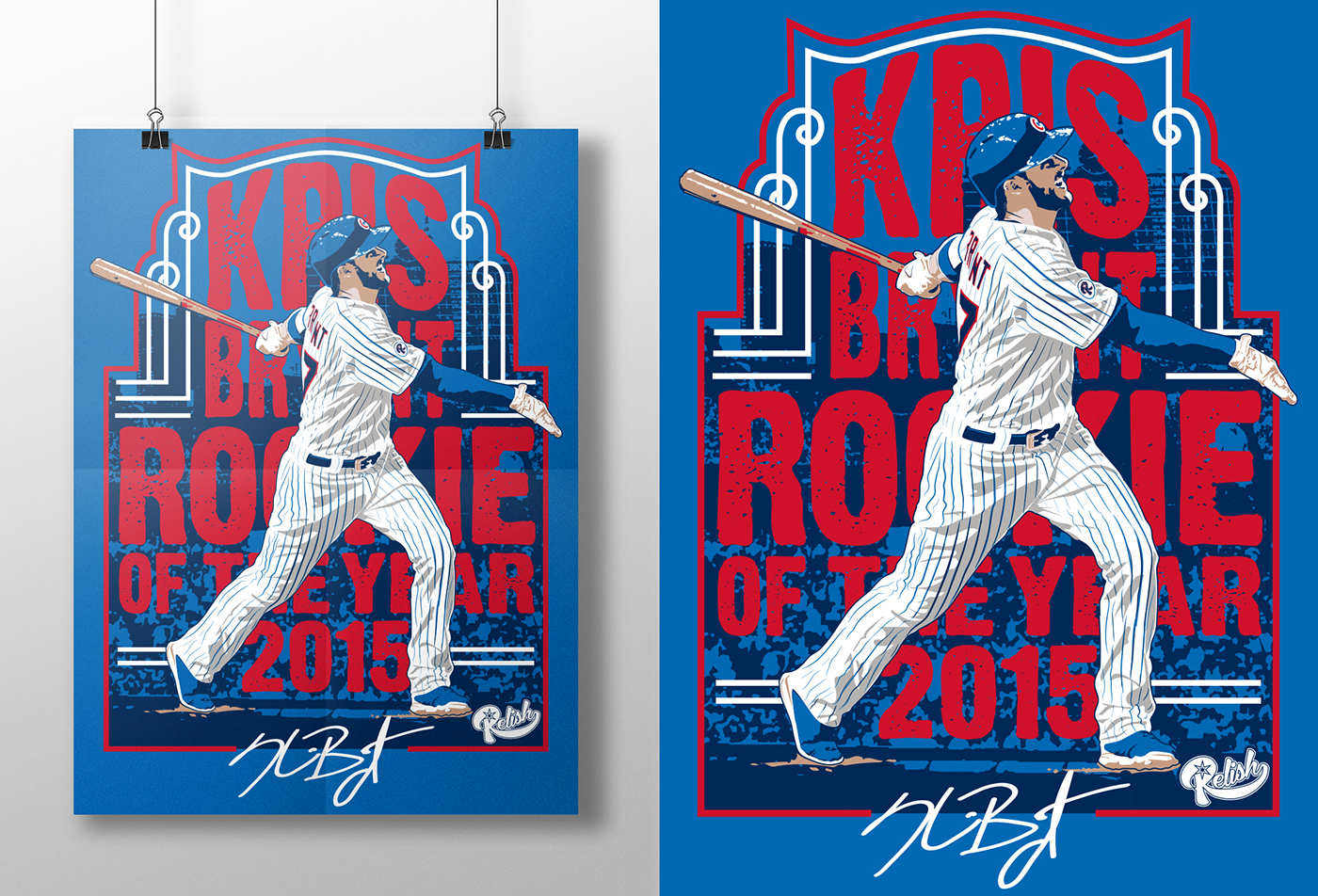
In the annals of sports history, few rookie seasons command the same level of scrutiny and awe as Kris Bryant’s “Rookie of the Year” campaign. The accolade itself is a badge of honor, reserved for those who burst onto the scene with an almost mythic blend of talent, poise, and sheer will. Yet, beneath the glittering statistics and highlight-reel moments lies a more nuanced narrative—one that asks not just *how* dominant Bryant was, but *why* his dominance felt so inexorable, so predestined. To dissect his rookie year is to unravel the threads of expectation, pressure, and the alchemy of raw potential meeting opportunity.
The Statistical Juggernaut: Numbers That Defy Rookie Convention
Kris Bryant’s rookie season was not merely impressive; it was a statistical earthquake. In an era where rookies are often eased into professional play, Bryant shattered conventions by posting numbers that would make even seasoned veterans blush. His slash line—batting average, on-base percentage, and slugging percentage—painted a picture of a hitter who had somehow skipped the usual rookie growing pains. A .300+ average, 25+ home runs, and an OPS north of .900 are figures that typically take years to achieve, yet Bryant wielded them like a seasoned pro from day one.
The advanced metrics only deepened the intrigue. His wRC+ (weighted runs created plus) hovered in the stratospheric 140s, a figure that places him among the game’s elite hitters, not its neophytes. Defensive metrics, too, told a story of a player who was not just holding his own but redefining positional excellence. His defensive runs saved (DRS) and ultimate zone rating (UZR) suggested a defensive savant, a rarity for a rookie whose primary value was often assumed to lie in his bat. The fusion of offensive firepower and defensive brilliance created a rookie season that felt less like a debut and more like a coronation.
The Psychological Alchemy: How Pressure Became His Catalyst
Dominance in sports is often framed in terms of physical skill, but the psychological dimension is equally pivotal. Kris Bryant’s rookie year was a masterclass in turning pressure into performance. From the moment he stepped into the batter’s box, he carried the weight of expectations—not just from fans and analysts, but from the very organization that drafted him. The Cubs, a franchise with a storied history but a recent drought of championship glory, had pinned their hopes on Bryant as a cornerstone of their resurgence. The burden of being “the chosen one” could have crushed a lesser player, but Bryant metabolized it into fuel.
His mental fortitude was evident in his clutch performances. In high-leverage situations—late innings, bases loaded, the game on the line—Bryant’s demeanor remained unflappable. His walk rates spiked in critical moments, a testament to his plate discipline under duress. The ability to elevate one’s game when the stakes are highest is the hallmark of a true superstar, and Bryant displayed it with the ease of someone who had already lived through a thousand such moments in his mind. This psychological resilience suggested that his dominance was not a fluke of timing but a reflection of an inner compass calibrated for greatness.
The Cultural Phenomenon: Why Bryant’s Rookie Year Felt Like Destiny
Beyond the numbers and the psychological fortitude, Kris Bryant’s rookie season transcended the sport itself, morphing into a cultural touchstone. His arrival coincided with a moment when baseball was grappling with its identity—caught between tradition and the analytics revolution, between the grind of the minor leagues and the instant gratification of highlight reels. Bryant became a symbol of the game’s future, a bridge between the old guard and the new wave of players who wielded data like a weapon.
The fascination with his rookie year was not merely about his performance; it was about the *narrative* he embodied. Here was a player who had been hyped as the savior of a franchise, only to deliver on that promise with a season that felt scripted by Hollywood. The media’s obsession with his “can’t-miss” prospect status created a feedback loop, amplifying every at-bat into a spectacle. Fans and analysts alike projected their hopes and fears onto his shoulders, turning his rookie year into a Rorschach test for baseball’s collective psyche. Was his dominance a product of his talent, or was it a reflection of our own desperate need to believe in fairy-tale endings?
The Comparative Lens: Where Bryant Stands Among Rookie Greats
To fully grasp the magnitude of Kris Bryant’s rookie season, it’s instructive to place it alongside the annals of baseball history. Names like Mike Trout, Fernando Valenzuela, and Ichiro Suzuki evoke the same sense of awe, each having redefined what it means to be a rookie phenom. Yet Bryant’s case is unique in its completeness. While Trout’s rookie year was undeniably brilliant, it was part of a larger arc of dominance that spanned years. Valenzuela’s rookie season was a cultural earthquake, but it was also a flash in the pan, a comet that burned bright before fading. Ichiro’s arrival was revolutionary, but his rookie year was more about defying expectations than setting them.
Bryant, by contrast, delivered a rookie season that checked every box: offensive production, defensive prowess, and psychological resilience. His .275 average, 26 home runs, and 99 RBIs in 151 games were not just impressive for a rookie; they were the kind of numbers that could anchor a franchise for a decade. The comparison to other rookies only underscored the rarity of his achievement. He wasn’t just good for a rookie; he was good for *any* player, period. This universality of excellence is what set his rookie year apart, making it a benchmark against which future rookies would inevitably be measured.
The Lingering Question: Was It All Too Perfect?
For all the adulation heaped upon Kris Bryant’s rookie season, a shadow of skepticism lingers. In an era where advanced metrics and scouting reports have democratized the evaluation of talent, is it possible that Bryant’s dominance was, in part, a product of the system rather than pure, unfiltered skill? The Cubs’ front office, led by Theo Epstein, was renowned for its analytical rigor. Was Bryant’s rookie year a triumph of data-driven player development, where every swing, every at-bat, was optimized to perfection?
This line of questioning does not diminish Bryant’s achievements but rather contextualizes them within the broader evolution of the sport. The modern baseball landscape is one where rookies are no longer left to figure things out through trial and error. Instead, they are groomed in environments where failure is minimized, and success is engineered. Bryant’s rookie year, then, was not just a display of individual talent but a testament to the systems that shape it. The fascination with his dominance is, in part, a fascination with the machinery behind the magic—the algorithms, the training regimens, the psychological conditioning that turn raw potential into polished performance.
The Legacy of a Rookie Year: Beyond the Box Scores
Kris Bryant’s rookie season was more than a collection of statistics and highlight reels; it was a cultural moment that transcended the sport. It was a reminder of why we love baseball—the way it can turn a single season into a legend, a rookie into a hero, and a franchise into a dynasty. Yet, it also posed a question that lingers in the minds of fans and analysts alike: What happens next?
The transition from rookie sensation to perennial All-Star is never guaranteed. The sophomore slump is a well-documented phenomenon, a humbling reminder that the league is always evolving. For Bryant, the challenge was not just to replicate his rookie year but to surpass it. The expectations he carried into his second season were not just high; they were stratospheric. And yet, if his rookie year taught us anything, it’s that Kris Bryant has a way of defying the odds, of turning pressure into performance, and of making the impossible feel inevitable.
The fascination with his rookie year, then, is not just about the past but about the future. It’s about the unspoken hope that some players are not just great for a season but great for a lifetime. In that sense, Kris Bryant’s rookie year was not an endpoint but a beginning—a beginning of a career that continues to shape the narrative of baseball itself.