Have you ever wondered what it would be like to hold a piece of baseball history in your hands? Not just any baseball—one signed by the greatest closer the game has ever known, a man whose name alone sends shivers down the spines of opposing batters. Mariano Rivera, the legendary New York Yankees pitcher, didn’t just dominate the mound; he etched his legacy into the very fabric of the sport. But here’s the kicker: what if that autographed baseball isn’t just a cherished keepsake but also a potential goldmine? The question isn’t just about sentiment—it’s about value. How much is a Mariano Rivera signed baseball worth today, and what makes one piece more valuable than another? Buckle up, because the answer isn’t as straightforward as you might think.
Let’s start with the basics. A Mariano Rivera signed baseball isn’t just a ball with a signature; it’s a relic of a career that spanned two decades, a man who saved 652 games, and a postseason resume that reads like a myth. But here’s where things get interesting: not all Rivera autographed baseballs are created equal. The value of these collectibles hinges on a labyrinth of factors, from the type of ball to the authenticity of the signature, and even the provenance behind it. Imagine holding a baseball that Rivera used in a game, its leather now worn by the grit of the diamond, his signature scrawled across the sweet spot. That’s not just a ball—it’s a story. But how do you quantify that story in dollars?
The Ball Itself: More Than Just a Sphere of Leather and Yarn
Not all baseballs are born equal, and the same goes for the ones Rivera signed. The most coveted pieces are those that bear the marks of actual gameplay—game-used balls, often accompanied by dirt, scuffs, or even the faintest remnants of a high-stakes pitch. These aren’t pristine, museum-piece baseballs; they’re battle-worn treasures that tell a tale of sweat, strategy, and sheer dominance. A game-used Rivera baseball with dirt embedded in its stitches or a display case that includes a fragment of the mound? That’s the holy grail for collectors. These items don’t just hold a signature; they hold a piece of history.
Then there are the presentation baseballs—those pristine, white spheres often given out as gifts or used in ceremonies. These are beautiful, sure, but they lack the tangible connection to Rivera’s on-field heroics. Their value lies more in the signature’s crispness and the accompanying paperwork (like a Certificate of Authenticity from a reputable grading service). A flawless Rivera autograph on a brand-new baseball might fetch a pretty penny, but it’s the game-used variants that command the kind of prices that make your wallet wince.
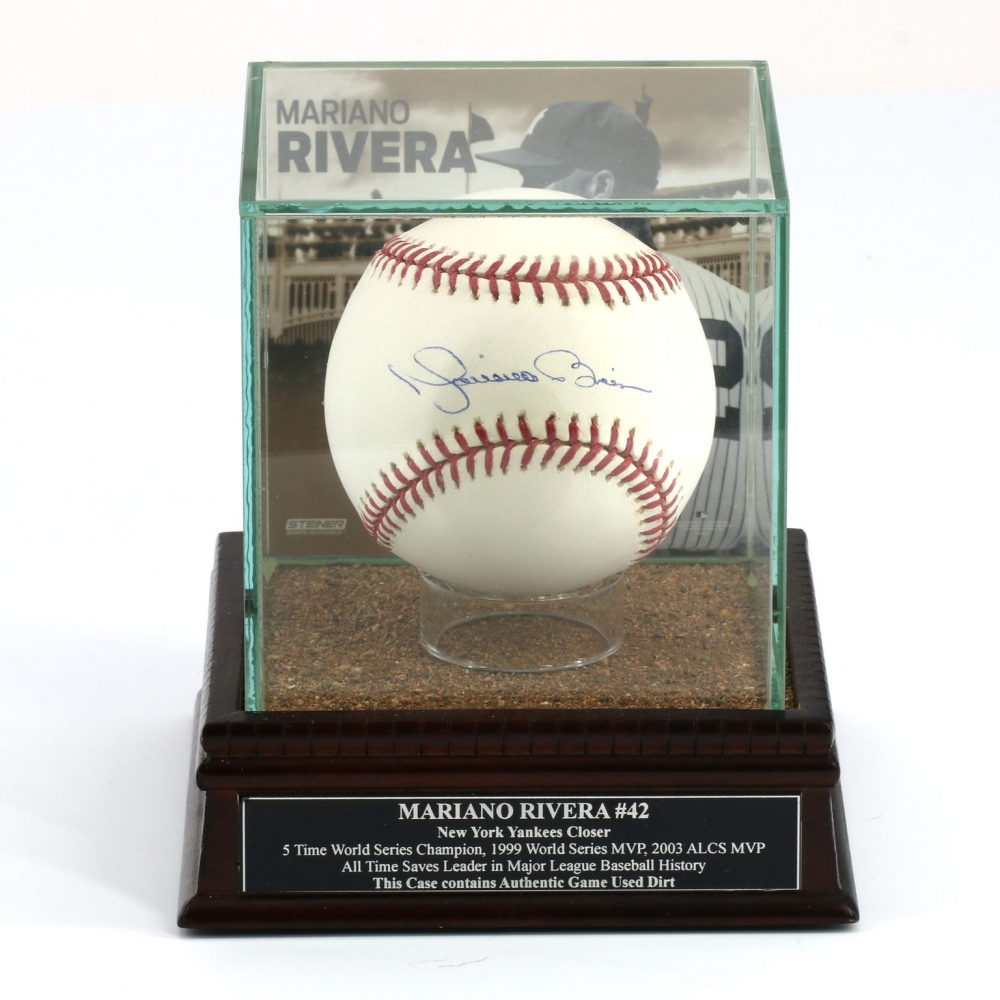
And let’s not forget the display cases. A Rivera baseball encased in glass, with a plaque detailing its significance, isn’t just a collectible—it’s a conversation starter. These pieces often come with a story: the game it was used in, the moment it was signed, or even a video snippet of Rivera’s dominance. The more context, the higher the value. It’s like buying a painting; the frame and the plaque matter almost as much as the artwork itself.
The Signature: A Masterclass in Consistency and Scarcity
Rivera’s signature is the North Star of this collectible universe. Unlike some players whose autographs evolve—or devolve—over time, Rivera’s remained a study in precision. His signature is a looping, elegant script, a signature that’s instantly recognizable even to the untrained eye. But here’s the twist: not all Rivera signatures are equal. Early-career autographs, especially those on game-used balls from the 1990s, are rarer and often more valuable than later ones. Why? Because Rivera’s dominance peaked in those years, and the demand for his early signatures is insatiable.
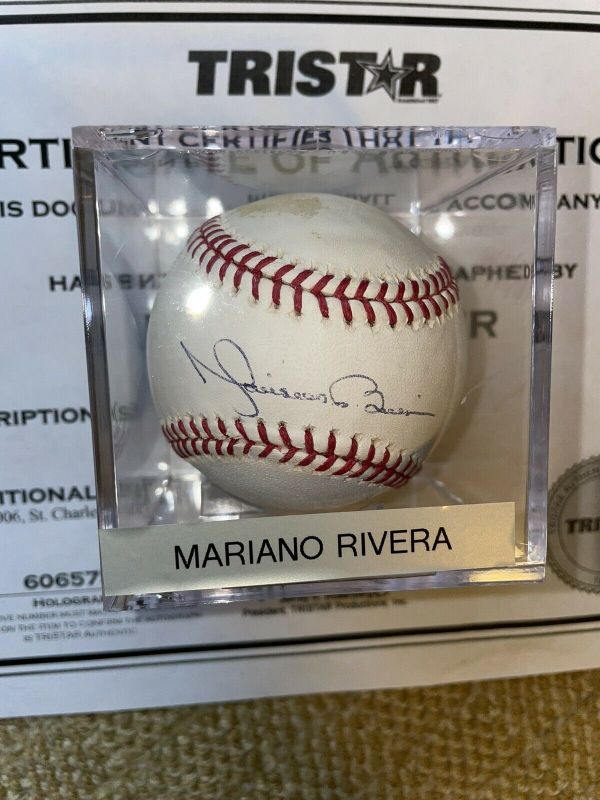
Then there’s the matter of forgery. In a world where autographs can be faked with alarming skill, provenance is everything. A Rivera baseball without a paper trail—a chain of custody that traces its authenticity back to Rivera himself or a trusted third-party authenticator—is like a ship without a rudder. It might look the part, but you’ll never know if it’s the real deal. That’s why grading services like PSA or JSA are worth their weight in gold. A baseball with a “10” grade from PSA isn’t just a collectible; it’s an investment.
And let’s talk about the sweet spot. Rivera’s signature on the sweet spot of the baseball—the part where the bat makes contact—is the most desirable placement. It’s not just about aesthetics; it’s about the story. That’s where Rivera’s pitches found their mark, and that’s where his signature feels most at home. A baseball with a sweet-spot signature is like a first-round draft pick: it’s the cream of the crop.
The Market: Where Sentiment Meets Speculation
The market for Rivera autographed baseballs is a fascinating beast. It’s not just about supply and demand; it’s about nostalgia, legacy, and the sheer force of Rivera’s personality. Yankees fans, in particular, are willing to pay a premium for anything tied to Rivera’s storied career. But this isn’t a market for the faint of heart. Prices can fluctuate wildly based on trends, auctions, and even the whims of collectors. A game-used Rivera baseball might sell for $5,000 one month and $8,000 the next, depending on who’s bidding and why.
Auction houses play a huge role in setting the bar. When a Rivera baseball hits the block at a major auction, it’s not just a transaction—it’s an event. Bidders from around the world log in, hearts racing, wallets at the ready, all vying for a piece of history. The competition drives prices up, sometimes to dizzying heights. But here’s the catch: not every auction is a goldmine. Some pieces sell for a fraction of their expected value, while others exceed expectations by leaps and bounds. It’s a gamble, but for those who know the market, it’s a gamble worth taking.
Then there’s the secondary market. Once a Rivera baseball changes hands, its value can either stabilize or skyrocket, depending on its new owner’s ability to market it. Social media, collector forums, and even word of mouth can turn a modestly priced item into a must-have. The key is visibility. A Rivera baseball tucked away in a private collection is worth less than one displayed at a convention or featured in a high-profile article. The market rewards exposure.
The Wild Cards: What Could Make (or Break) Your Investment
If you’re considering diving into the world of Rivera autographed baseballs, you need to know the wild cards—the factors that could either make your investment a home run or leave you striking out. First up: condition. A baseball with a signature that’s faded, smudged, or peeling is like a vintage car with a rusted frame. It doesn’t matter how rare it is; if it’s not in good shape, its value plummets. That’s why grading services are so crucial. They take the guesswork out of condition, giving you a clear picture of what you’re buying.
Next, consider the accompanying materials. A baseball with a certificate of authenticity is like a painting with a provenance letter—it’s not just the art that matters, but the story behind it. The more paperwork, the better. Provenance can include anything from a letter of authenticity to a video of the signing session. The more you can tie the baseball to Rivera himself, the more valuable it becomes.
And then there’s the elephant in the room: the Rivera effect. As time passes, Rivera’s legacy only grows stronger. New generations of fans discover his greatness, and demand for his memorabilia surges. But here’s the flip side: as Rivera ages and his physical presence becomes rarer, the supply of his autographed items dwindles. That’s a recipe for rising prices. If you’re holding a Rivera baseball today, you’re holding a piece of a legacy that’s only going to become more valuable with time.
So, what’s the bottom line? A Mariano Rivera signed baseball isn’t just a collectible; it’s a time capsule, a piece of history, and potentially a lucrative investment. The most valuable pieces are those with a story—game-used balls, sweet-spot signatures, and impeccable provenance. But be warned: the market is unpredictable, and not every Rivera baseball will make you rich. It’s a game of patience, knowledge, and a little bit of luck.
If you’re thinking about adding a Rivera baseball to your collection, do your homework. Know the market, understand the grading system, and be prepared to pay a premium for the real deal. And remember: the best collectibles aren’t just about the money. They’re about the connection to the game, the players, and the moments that define baseball’s rich history. Whether you’re a die-hard Yankees fan or a savvy investor, a Rivera signed baseball is more than just an item—it’s a legacy in stitches and ink.