The Mike Trout autograph card market has long been a battleground where collectors and investors clash over value, rarity, and long-term potential. Once a surefire bet for appreciating assets, these cards now sit at a crossroads—where nostalgia, speculation, and shifting market dynamics collide. But is it still wise to bet on Trout’s signature, or has the golden era of autograph investing quietly slipped into the rearview mirror? The answer isn’t as simple as a yes or no. It demands a deeper dive into the forces shaping this niche, from the psychology of fandom to the cold calculus of depreciation and demand. What if the cards we’ve revered for years aren’t just losing value—they’re quietly rewriting the rules of what it means to invest in sports memorabilia?
The Allure of the Trout Effect: Why His Autographs Captivated Collectors
Mike Trout isn’t just another baseball player; he’s a generational talent whose name alone carries weight in the hobby. For over a decade, his autograph cards have been treated like blue-chip stocks—safe, prestigious, and perpetually in demand. The Trout Effect is real: a phenomenon where his presence alone elevates the perceived value of anything bearing his signature. This psychological pull is powerful. Collectors don’t just buy a card; they buy a piece of baseball immortality, a tangible connection to one of the game’s greatest players. But here’s the twist: that emotional investment may no longer align with the financial reality. The market’s infatuation with Trout’s legacy is colliding with a harsh truth—legacy doesn’t always translate to liquidity.
Consider the 2025 Topps Flagship Autograph, a card that once sold out in minutes, now lingering in auction houses like an unsold concert ticket. The Trout Effect is fading, not because his greatness is disputed, but because the market is maturing. Collectors are waking up to a sobering fact: not all autographs age like fine wine. Some turn to vinegar. The question isn’t whether Trout’s autographs are valuable—it’s whether they’re valuable enough to justify the premium over raw cards or even other superstars’ signatures.
The Cracks in the Foundation: Signs the Autograph Market Is Shifting
The Trout autograph market isn’t crashing—it’s recalibrating. And recalibration is often the first sign of a market in transition. Prices that once soared on hype and scarcity are now facing a reckoning. Auction results tell a story of inconsistency: a PSA 10 Trout autograph that sold for $1,200 in 2022 might fetch $800 today, while a raw version of the same card holds steady at $300. The disparity isn’t random; it’s a symptom of a market hungry for tangible returns, not just sentimental ones.
One of the most telling indicators is the rise of “chase” cards—limited-edition autographs buried in hobby boxes—losing their allure. Collectors who once emptied their wallets for a Trout autograph chase are now questioning whether the thrill is worth the cost. The secondary market is flooded with these cards, and scarcity alone isn’t enough to sustain demand. What’s emerging is a Darwinian shakeout: only the most pristine, historically significant, or uniquely rare Trout autographs are surviving the purge. The rest? They’re becoming relics of a bygone era, when the hobby operated on blind faith rather than financial prudence.
The Investment Paradox: When Passion Meets Portfolio
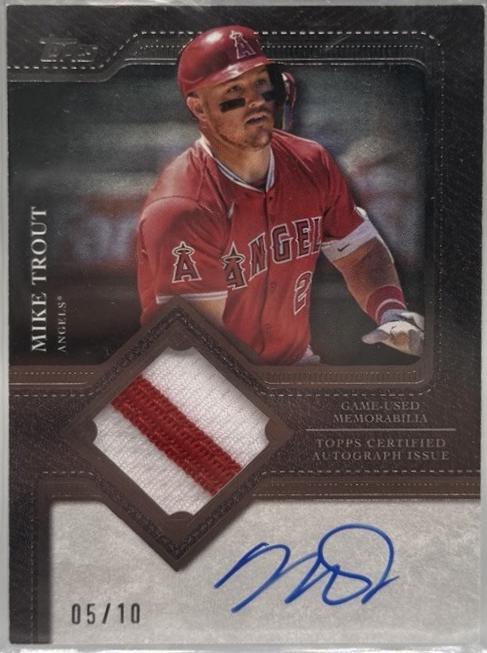
Investing in Trout autographs is a paradox wrapped in a contradiction. On one hand, you have a player whose career arc—despite injuries—still commands respect. His autographs are, in theory, a hedge against the volatility of the sports memorabilia market. On the other, you have a market that’s increasingly skeptical of autographs as assets. The paradox deepens when you consider that raw cards of Trout’s rookie year have outperformed his autographs in recent years. Why? Because raw cards are easier to flip, less prone to grading controversies, and carry lower entry costs. Autographs, by contrast, are a gamble on two variables: the player’s longevity and the collector’s willingness to pay a premium for a signature.
This isn’t to say Trout autographs are doomed. Far from it. But the investment thesis has shifted from “buy and hold forever” to “buy selectively and sell strategically.” The key lies in identifying which Trout autographs have the durability to weather market storms. First-edition cards from his early years? Potentially. Limited-run parallels from high-end sets? Maybe. But the flood of base-level autographs from every Topps run since 2012? Those are the cards most at risk of becoming wallpaper in a decade.
The Grading Gambit: How PSA/BGS Scores Can Make or Break Your Investment
Grading is the invisible hand shaping the Trout autograph market. A PSA 10 might command five times the price of a PSA 9, but the gap isn’t always justified by demand. The grading arms race has created a tiered system where only the top 5-10% of Trout autographs are truly liquid. The rest? They’re stuck in a purgatory of lowball offers and eBay purgatory. This creates a perverse incentive: collectors are forced to chase perfection, even when a card’s condition doesn’t justify the premium.
Consider the case of a 2019 Topps Chrome autograph. A PSA 9 might sell for $200, while a PSA 10 fetches $600. But is the $400 difference in value, or is it a psychological trap? The market says the latter. Grading has become a self-fulfilling prophecy—where the highest scores dictate value, regardless of whether the card’s eye appeal justifies it. For investors, this means two things: either play the grading game and pay the toll, or avoid autographs altogether and focus on raw cards where condition isn’t the sole arbiter of worth.
The Future of Trout Autographs: Niche Collecting or Fading Asset?
The Trout autograph market isn’t dying—it’s evolving. The hobby’s center of gravity is shifting from autographs as investments to autographs as collectibles. This subtle but critical distinction means that while prices may stagnate or dip, the cards that hold personal significance—first autographs, milestone signatures, or those tied to iconic moments—will retain value. The market is no longer about flipping cards for profit; it’s about preserving pieces of history.
For investors, this evolution is a double-edged sword. On one side, it means the days of passive, hands-off investing in Trout autographs are over. You can’t just buy a stack of base autographs and hope for appreciation. On the other, it opens the door for savvy collectors to curate sets with long-term cultural relevance. The smart money isn’t chasing every Trout autograph anymore—it’s chasing the right ones.
The Bottom Line: Should You Still Buy Mike Trout Autographs?
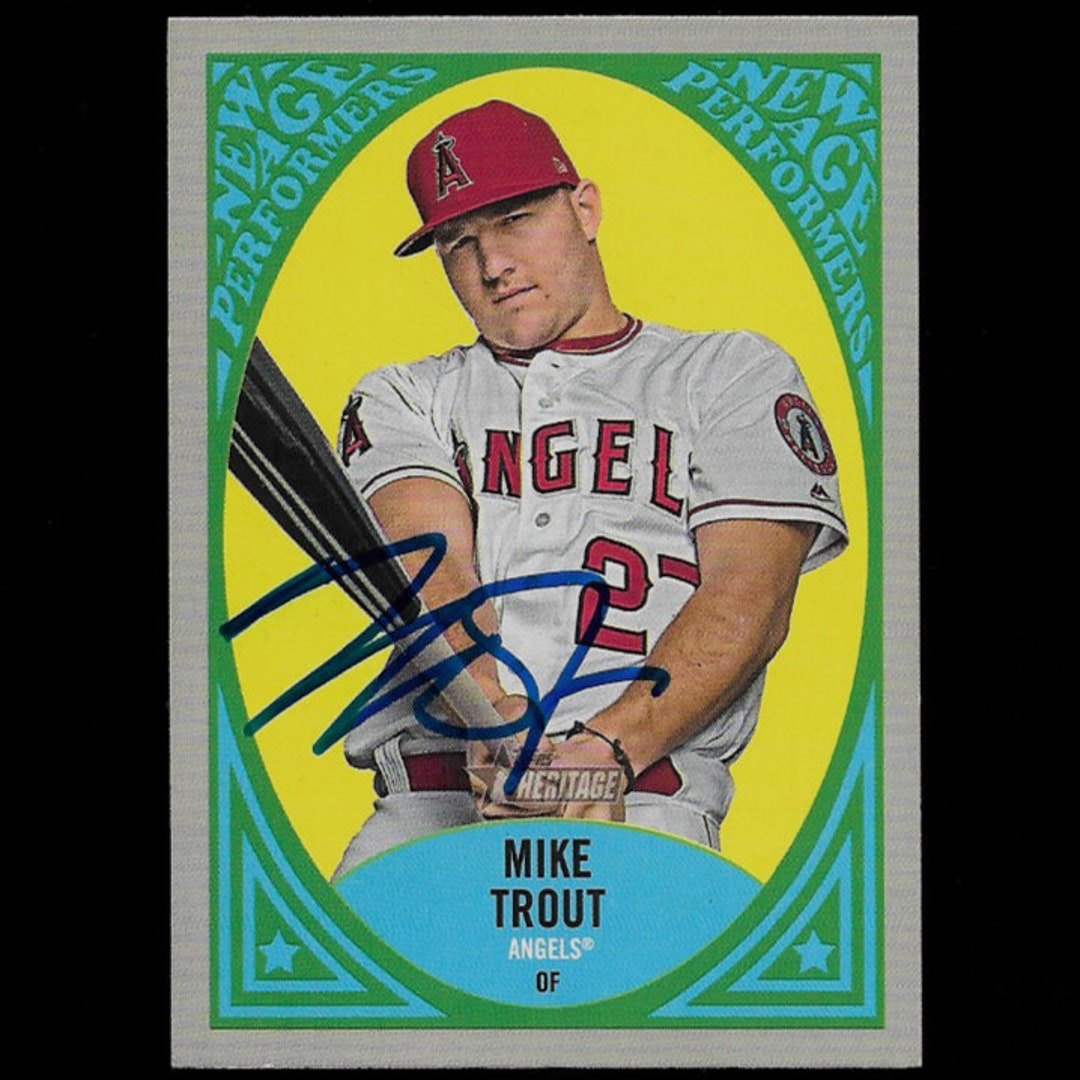
The answer depends on your goals. If you’re a collector who values the emotional connection to Trout’s career, then yes—autographs still hold merit. But if you’re an investor looking for appreciating assets, the calculus is far murkier. The Trout autograph market is no longer a sure thing; it’s a high-stakes game where only the most discerning players win. The cards that will thrive are those with scarcity, historical significance, or a story beyond just the signature. The rest? They’re becoming relics of a hobby that once believed autographs were the ultimate investment.
So, are Mike Trout autographs still a smart investment? The market says maybe—but only if you know where to look. The golden era of autograph collecting is over. The new era is about precision, patience, and a willingness to separate the wheat from the chaff. The Trout autograph isn’t dead; it’s just shedding its skin. And in that shedding, a new kind of value is emerging—one that rewards the collector, not the speculator.