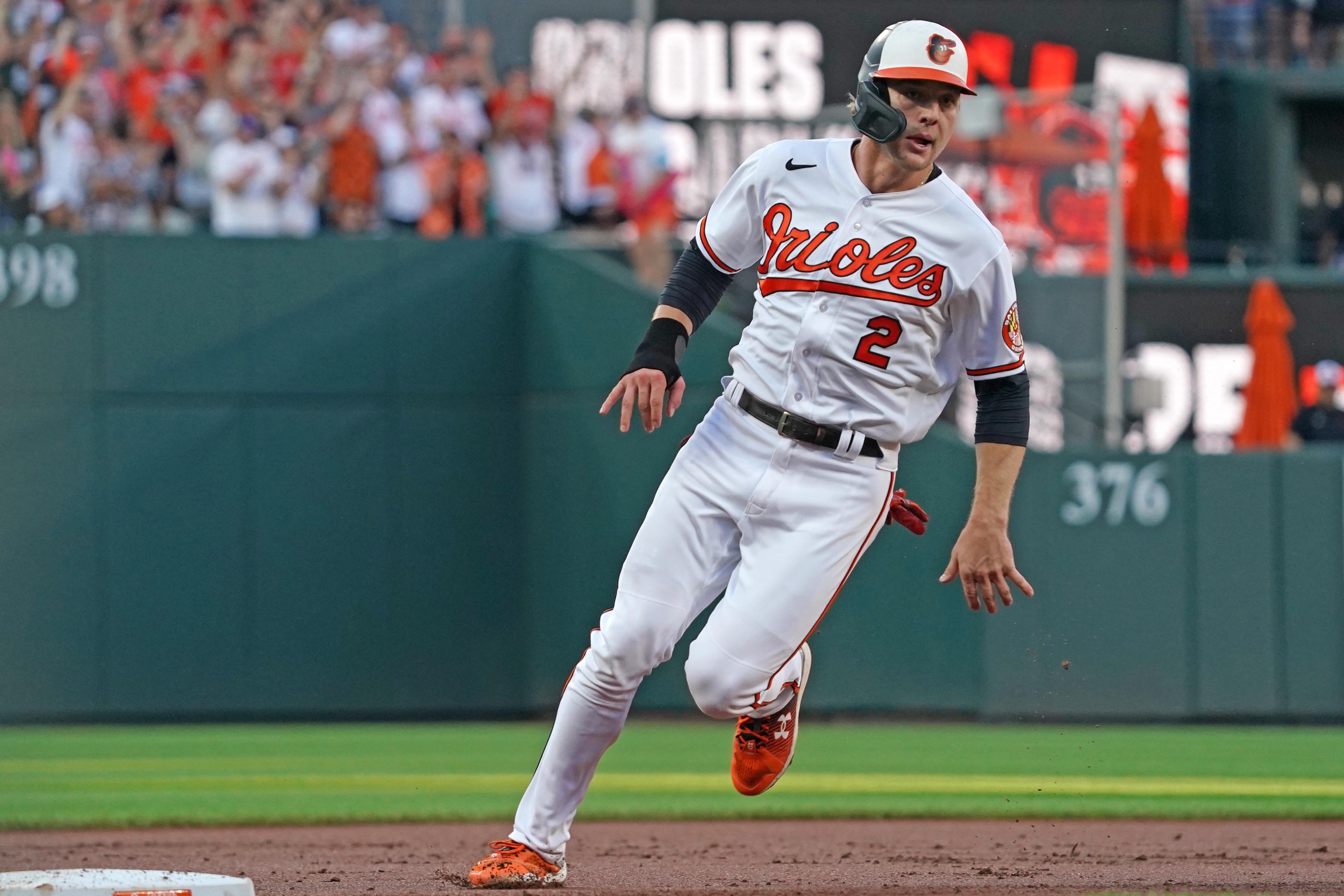
In the ever-evolving landscape of sports simulation games, *MLB The Show 25* stands as a titan, blending meticulous realism with exhilarating gameplay. Among its roster of virtual athletes, Gunnar Henderson—a rising star for the Baltimore Orioles—emerges as a contentious figure, sparking debates among players and critics alike. Is he the most overpowered (OP) player in the game? To answer that, we must dissect his attributes, gameplay mechanics, and the broader implications of his dominance within the virtual diamond.
The Powerhouse Profile: Henderson’s Virtual Dominance
Gunnar Henderson’s in-game representation in *MLB The Show 25* is nothing short of a statistical marvel. His ratings across key categories—power, speed, fielding, and arm strength—paint a picture of a player who transcends the limitations of his real-life counterpart. With a 95+ rating in power and contact, Henderson becomes a perpetual threat at the plate, capable of launching towering home runs with effortless precision. His 85+ speed rating ensures he’s not just a stationary slugger; he’s a dynamic force, turning singles into doubles and doubles into triples with uncanny ease.
The real kicker? His fielding metrics. A 90+ rating in both glove and arm strength transforms him into an infield vacuum, swallowing up grounders and firing laser beams to first base with the reliability of a machine. In a game where defensive prowess often takes a backseat to offensive firepower, Henderson’s all-around excellence makes him a rare breed—a player who excels in every facet of the sport. For competitive players, this versatility isn’t just an advantage; it’s a cheat code.
Gameplay Mechanics: Why Henderson Feels Unstoppable
The magic of Henderson’s OP status lies not just in his ratings but in how *MLB The Show 25*’s gameplay systems amplify his strengths. The game’s new physics engine, which governs ball flight and player movement, ensures that Henderson’s swings generate backspin that defies gravity, while his speed allows him to leg out infield hits with robotic consistency. Pitchers, even those with elite velocity, struggle to exploit his weaknesses because the game’s AI prioritizes contact over strikeouts when Henderson is at the plate.
Defensively, Henderson’s presence disrupts the rhythm of opposing players. Ground balls that would normally squeak through the infield in real life are gobbled up by his outstretched glove, while his cannon arm deters runners from taking extra bases. In online modes like Road to the Show or Ranked Seasons, opponents often find themselves forced into suboptimal strategies—walking Henderson to face weaker hitters or wasting pitches in the zone to avoid his prodigious power. It’s a frustrating cycle, one that underscores his overpowered nature.
Comparative Analysis: Henderson vs. Other Meta Players
To contextualize Henderson’s OP status, we must compare him to other dominant players in *MLB The Show 25*. Shohei Ohtani, for instance, remains a perennial powerhouse, but his reliance on pitching mechanics (a separate skill set) dilutes his offensive consistency. Meanwhile, players like Aaron Judge or Pete Alonso boast elite power but lack Henderson’s speed and defensive utility. The closest comparison might be a hybrid of attributes—imagine a player with the contact skills of José Altuve, the power of Giancarlo Stanton, and the defensive prowess of Nolan Arenado, all rolled into one.
What sets Henderson apart is his accessibility. Unlike some OP players who require extensive grinding or microtransactions to unlock, Henderson is often featured in promotional events or standard packs, making him attainable for both casual and competitive players. This ubiquity amplifies his impact, turning him into a household name within the *MLB The Show* community.
Community Reactions: Love Him or Loathe Him
The discourse surrounding Henderson’s OP status is as polarized as it is passionate. On one side, fans celebrate his well-rounded dominance, arguing that his inclusion adds depth and excitement to gameplay. They point to his ability to single-handedly carry teams to victory in clutch moments, making him a fan-favorite for clutch performances. On the other side, detractors decry his lack of counterplay, arguing that his presence stifles creativity and reduces the game’s challenge to a monotonous cycle of exploiting his strengths.
Online forums and social media platforms are rife with anecdotes of Henderson’s exploits. Players recount stories of hitting 50+ home runs in a single season or turning double plays with the precision of a shortstop playing at a higher difficulty setting. Memes and viral clips further cement his reputation, with some joking that Henderson isn’t a player but a glitch in the game’s code. Yet, for every critic, there’s a loyalist who defends his design, insisting that his OP status is a testament to the game’s commitment to realism—after all, real-life Henderson is a legitimate MVP candidate.
Strategic Implications: How to Counter Henderson’s Dominance
For players struggling against Henderson’s tyranny, there are strategies to mitigate his impact. Pitching inside to exploit his lower contact rating on high heat can be effective, though it risks walking him. Defensive shifts, while not as impactful as in real MLB, can still limit his extra-base hits by funneling his grounders toward over-shifted defenders. In franchise mode, scouting and developing pitchers with high strikeout rates can neutralize his power potential by reducing his plate appearances.
Another approach is to embrace Henderson’s strengths. Building a team around him—stacking the lineup with high-contact hitters to protect him or surrounding him with elite defensive infielders—can turn him into the cornerstone of a championship-caliber squad. The key is adaptation; Henderson’s OP status isn’t an insurmountable obstacle but a challenge to be met with creativity and tactical acumen.
The Future of OP Players in *MLB The Show 25*
Henderson’s rise to OP status raises broader questions about the future of *MLB The Show*. As the franchise continues to refine its gameplay mechanics, how will developers balance realism with competitive integrity? Will Henderson’s dominance be a temporary phenomenon, or will he set a precedent for future meta-defining players? The answer may lie in the game’s post-launch updates, where adjustments to ratings, physics, or AI could reshape the competitive landscape.
For now, Henderson remains a symbol of the game’s dual nature—both a testament to its depth and a cautionary tale about the pitfalls of overpowered design. Whether you view him as a necessary evolution or a symptom of imbalance, his impact on *MLB The Show 25* is undeniable. He’s not just a player; he’s a phenomenon, a virtual titan who forces players to rethink their strategies and, perhaps, their love for the game itself.