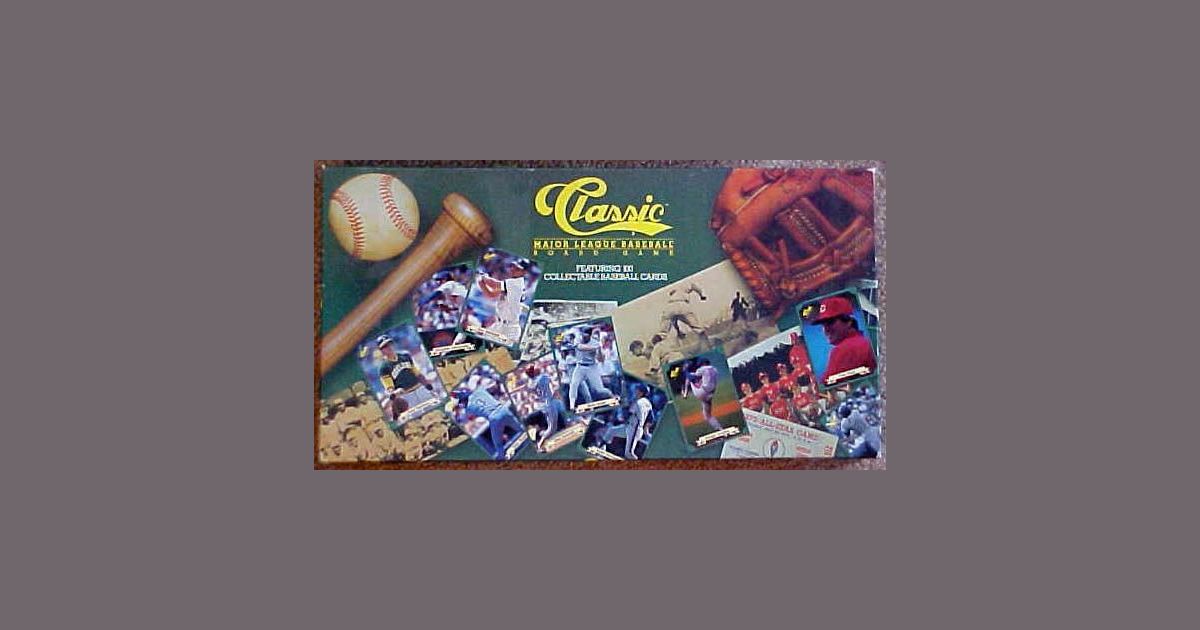
What if a board game could capture the thrill of a sun-drenched afternoon at the ballpark, the crack of the bat echoing through the stands, and the strategic depth of a manager’s playbook—all without leaving your living room? For generations of fans, Classic Major League Baseball has done just that, offering a tactile, immersive experience that transcends mere nostalgia. More than just a relic of tabletop gaming’s golden age, this game endures as a testament to how well-designed mechanics can evoke the spirit of a beloved sport. But why does it still resonate in an era of hyper-realistic video games and AI-driven simulations? The answer lies in its ability to blend simplicity with surprising strategic nuance, creating a challenge that feels as rewarding as a walk-off home run.
The Allure of Analog Baseball: Why Simplicity Sells
In a digital world where games boast photorealistic graphics and physics engines that mimic real-world trajectories, Classic Major League Baseball stands apart by embracing minimalism. There are no flashy animations, no voice-acted commentary—just a cardboard field, a pair of dice, and a rulebook that distills the essence of the sport into a handful of elegant mechanics. This stripped-down approach is its greatest strength. By stripping away the distractions, the game forces players to engage with the core elements of baseball: timing, probability, and split-second decision-making. It’s a refreshing departure from the overwhelming complexity of modern titles, offering instead a meditative, almost Zen-like experience where every roll of the dice feels like a pivotal at-bat.
The game’s simplicity also makes it accessible. Unlike digital simulators that demand hours of tutorial time to master, Classic Major League Baseball can be taught in minutes. Yet, this accessibility doesn’t come at the expense of depth. Beneath its unassuming exterior lies a layer of strategic intrigue, where players must weigh risks, adapt to the dice’s whims, and outmaneuver their opponent with the same cunning as a veteran skipper. It’s a reminder that the best games—whether digital or analog—don’t need to dazzle to captivate.
Dice, Drama, and the Illusion of Control
At the heart of Classic Major League Baseball lies a deceptively simple mechanic: the dice roll. Each pitch, hit, and defensive play is determined by a roll of the dice, introducing an element of chance that mirrors the unpredictability of real baseball. But here’s the twist: chance isn’t the enemy of skill—it’s the catalyst for drama. A single roll can turn a routine grounder into a game-winning hit or a sure-fire strikeout into a bloop single. This unpredictability forces players to embrace adaptability, much like a manager adjusting his lineup in the seventh inning.
Yet, the game’s brilliance lies in how it balances luck with player agency. While the dice dictate outcomes, the players control the strategy. Do you play it safe with a contact hitter, or swing for the fences with a power slugger? Do you pitch around a dangerous batter or challenge him with heat? These decisions add a layer of psychological warfare, where bluffing and misdirection become as important as raw talent. The result is a dynamic, ever-shifting battle where no two games play out the same way—a far cry from the scripted narratives of video game campaigns.
The Nostalgia Factor: A Bridge Between Generations
For many, Classic Major League Baseball is more than a game—it’s a time capsule. Released during an era when board games were the primary source of entertainment for families and friends, it carries the weight of shared memories. Parents who grew up with it now pass it down to their children, creating a lineage of fans who bond over the same tactile joys: the clatter of dice, the rustle of cards, the thrill of a last-second comeback. In an age of fleeting digital trends, this continuity is a rare and precious thing.
But nostalgia alone doesn’t sustain a game’s longevity. What keeps Classic Major League Baseball alive is its ability to transcend its era. While modern baseball board games often prioritize complexity or realism, this one thrives on its timeless appeal. It doesn’t rely on licensed team names or intricate player stats; instead, it captures the universal language of baseball—the drama, the tension, the sheer unpredictability of a sport where anything can happen. In doing so, it becomes a blank canvas for the imagination, allowing players to project their own favorite teams, players, and moments onto its simple framework.
The Hidden Depth: Why Casual Players Keep Coming Back
One might assume that a game with such straightforward mechanics would grow stale after a few plays. Yet, Classic Major League Baseball defies expectations by offering layers of depth that reveal themselves over time. The key lies in its scalability. Beginners can enjoy the game at face value, reveling in the excitement of a walk-off hit or a clutch strikeout. But as they play more, they begin to notice patterns, exploit weaknesses, and refine their strategies. The dice rolls, once a source of frustration, become a puzzle to solve.
Consider the pitcher’s dilemma. A novice might throw fastballs indiscriminately, only to be burned by a well-timed hit. A seasoned player, however, learns to mix speeds, exploit matchups, and even deceive the batter with a well-timed pickoff play. The game rewards creativity, punishes predictability, and encourages players to think several steps ahead. It’s a masterclass in emergent gameplay, where simple rules give rise to complex, dynamic interactions.
Can It Survive the Digital Onslaught?
In an era dominated by MLB The Show and Out of the Park Baseball, where every pitch is calculated to the decimal and every swing is a physics simulation, does a dice-based board game stand a chance? The answer is a resounding yes—but not without challenges. The most pressing threat is the perception of obsolescence. Younger generations, raised on hyper-realistic digital experiences, may dismiss Classic Major League Baseball as quaint or outdated. How do you convince someone accustomed to 60 FPS graphics and dynamic commentary that a cardboard field and a pair of dice can deliver just as much excitement?
The solution lies in reframing the experience. This isn’t a game about replicating reality; it’s about capturing the essence of baseball. It’s the difference between watching a highlight reel and reliving the tension of a bottom-of-the-ninth showdown with your best friend. The tactile nature of the game—feeling the weight of the dice in your hand, the thrill of flipping a card to reveal a game-changing play—creates an intimacy that digital games often lack. In a world of infinite distractions, there’s something profoundly satisfying about unplugging and engaging in a shared, tactile experience.
The Future of Analog Baseball Games
As board games continue to evolve, so too does Classic Major League Baseball. Modern editions have introduced refinements—updated player stats, streamlined rules, and even digital companions to track progress. Yet, the core experience remains unchanged, a testament to the game’s enduring design. The challenge now is to ensure that it doesn’t become a relic, confined to dusty attics and garage sales. How can it stay relevant in a market saturated with innovation?
One possibility is the rise of hybrid experiences, where analog and digital elements coexist. Imagine an app that simulates the dice rolls, tracks statistics in real-time, and even generates animated replays of key plays. Such a fusion could attract new players while preserving the tactile joy of the original. Alternatively, the game could embrace its nostalgic appeal, positioning itself as a retro alternative to the sleek, high-tech simulators of today. After all, there’s a growing market for analog experiences—a desire for simplicity in a world of complexity.
Ultimately, the longevity of Classic Major League Baseball hinges on its ability to adapt without losing its soul. It must remain true to the spirit that made it a classic in the first place: the joy of shared competition, the thrill of chance, and the timeless appeal of baseball itself. In an age where everything is instant, this game reminds us that sometimes, the best experiences are the ones that unfold slowly, deliberately, and with a little bit of luck.