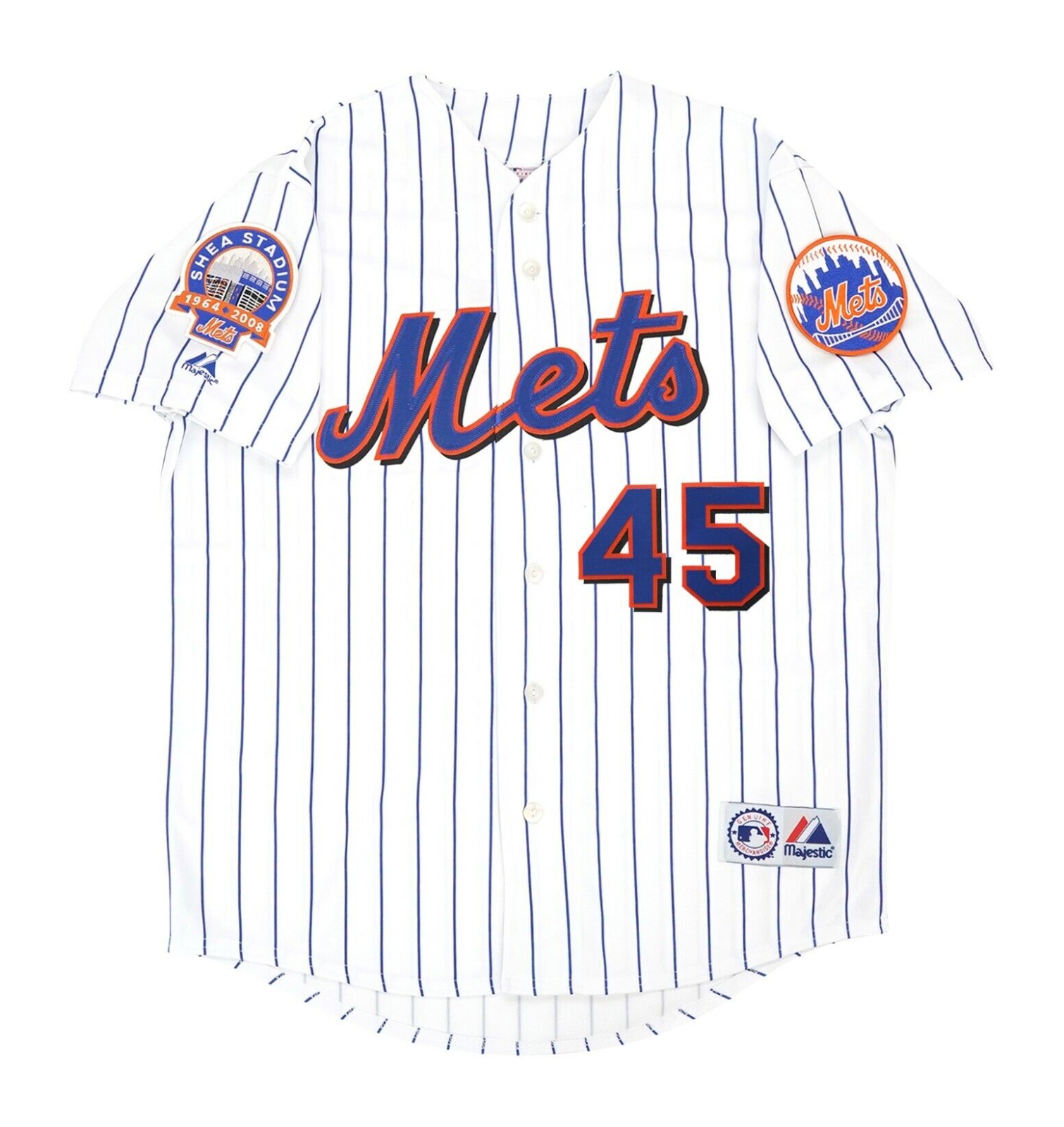
The New York Mets of 2008 were a team caught between promise and peril, a squad that teetered on the edge of greatness yet stumbled into the abyss of mediocrity. With a roster brimming with talent, veteran savvy, and youthful exuberance, they entered the season as dark horses in a division where the Philadelphia Phillies stood as the unassailable titans. The 2008 campaign was supposed to be the year the Mets shed their reputation as perennial underachievers, a year where their collective firepower would ignite a postseason run. Instead, it became another chapter in a long saga of near-misses, a season where potential curdled into frustration, and where the echoes of “almost” reverberated louder than the cheers of victory.
The Illusion of Invincibility: A Roster Built for Dominance
The 2008 Mets were a paradox—a team that looked invincible on paper but crumbled under the weight of its own expectations. At the heart of their lineup stood David Wright, the franchise cornerstone, a third baseman whose bat and glove had already cemented his legacy. Flanking him were power hitters like Carlos Beltrán and Carlos Delgado, whose combined offensive prowess suggested a lineup capable of decimating any pitching staff. The rotation, anchored by Johan Santana—a Cy Young winner in 2006—boasted a left-handed ace whose fastball and changeup could befuddle even the most seasoned hitters. Yet, for all their individual brilliance, the Mets were a team that never quite coalesced into a cohesive unit.
Their defense, once a strength, became a liability as injuries and ineptitude turned infielders into liabilities. José Reyes, the speedster who could ignite rallies with a single stolen base, was often sidelined by injuries, leaving the Mets without their most dynamic playmaker. The bullpen, once a fortress, morphed into a revolving door of blown saves and managerial misfires. The 2008 roster was a mosaic of talent, but like a stained-glass window in a storm, its beauty was obscured by the cracks in its foundation.
The Phantom of Consistency: Injuries and the Curse of Fragility
Injuries were the silent saboteurs of the 2008 Mets, a relentless tide that eroded their chances before the season even reached its midpoint. Carlos Delgado, the aging slugger whose bat had once been the backbone of the lineup, was felled by a hip injury, leaving a gaping hole in the heart of the order. Beltrán, too, was hobbled by ailments, his once-lethal swing reduced to a shadow of its former self. Even Santana, the team’s ace, was not immune to the siren call of the disabled list, his absence leaving the rotation to limp along with a patchwork of starters.
The Mets’ fragility was not just physical but psychological. Every setback became a self-fulfilling prophecy, a reminder that this team, for all its firepower, lacked the resilience to weather the inevitable storms of a 162-game season. The bullpen, once a strength, became a graveyard of blown leads, where closers like Francisco Rodríguez—despite his gaudy save totals—could not escape the specter of inconsistency. The Mets were a team that played brilliantly in spurts, only to unravel in the quiet moments between the highlights.
The Managerial Mirage: Willie Randolph’s Unraveling Vision
At the helm stood Willie Randolph, a man whose tenure in Queens was defined by flashes of brilliance and a slow descent into irrelevance. Randolph’s managerial style, once praised for its balance of discipline and creativity, became a liability as the season wore on. His bullpen management was a study in contradiction—brilliant in its flexibility, yet disastrous in its execution. Pitching changes became a game of Russian roulette, where every decision carried the weight of a potential meltdown.
Randolph’s relationship with his players, once a source of cohesion, frayed under the pressure of expectations. The locker room, once a bastion of camaraderie, became a pressure cooker of frustration. The manager’s inability to harness the team’s talent—or perhaps his players’ inability to respond to his leadership—turned the 2008 season into a slow-motion car crash. By the time the Mets limped to a disappointing finish, Randolph’s fate was sealed, his tenure reduced to a cautionary tale about the perils of overpromising and underdelivering.
The Collapse of a Dynasty in the Making
The 2008 Mets were not just a bad team; they were a team that had forgotten how to win. Their collapse was not the result of a single catastrophic event but a series of missteps, misfortunes, and missed opportunities. The Phillies, their division rivals, surged ahead with a relentless efficiency that the Mets could not match. While Philadelphia’s rotation thrived and their lineup clicked, the Mets were left adrift, a ship without a rudder in a sea of mediocrity.
Their late-season surge, a brief flicker of hope in an otherwise dismal stretch, was too little, too late. The Mets finished the season with a record that betrayed their talent, a .500 campaign that felt like a defeat. The postseason, once a tantalizing possibility, became a distant mirage. The 2008 roster, for all its promise, had failed to deliver, leaving behind a legacy of “what ifs” and a fanbase left to wonder what might have been.
The Lingering Echoes: Why the 2008 Mets Still Haunt the Franchise
More than a decade later, the 2008 Mets remain a cautionary tale—a reminder that talent alone is not enough to guarantee success. Their story is one of potential squandered, of a franchise that came so close to greatness only to watch it slip through its fingers. The lessons of 2008 are still whispered in the halls of Citi Field, a specter that haunts every promising young roster that takes the field.
The Mets’ failure in 2008 was not just a statistical anomaly but a cultural one. It was a season where the team’s identity fractured under the weight of its own hype, where the bright lights of New York became a glare that obscured the path to victory. The 2008 Mets were a team that played with fire, only to be consumed by the flames. Their legacy is a testament to the fragility of greatness—and a warning that even the most dazzling rosters can crumble when the moment demands more than just talent.