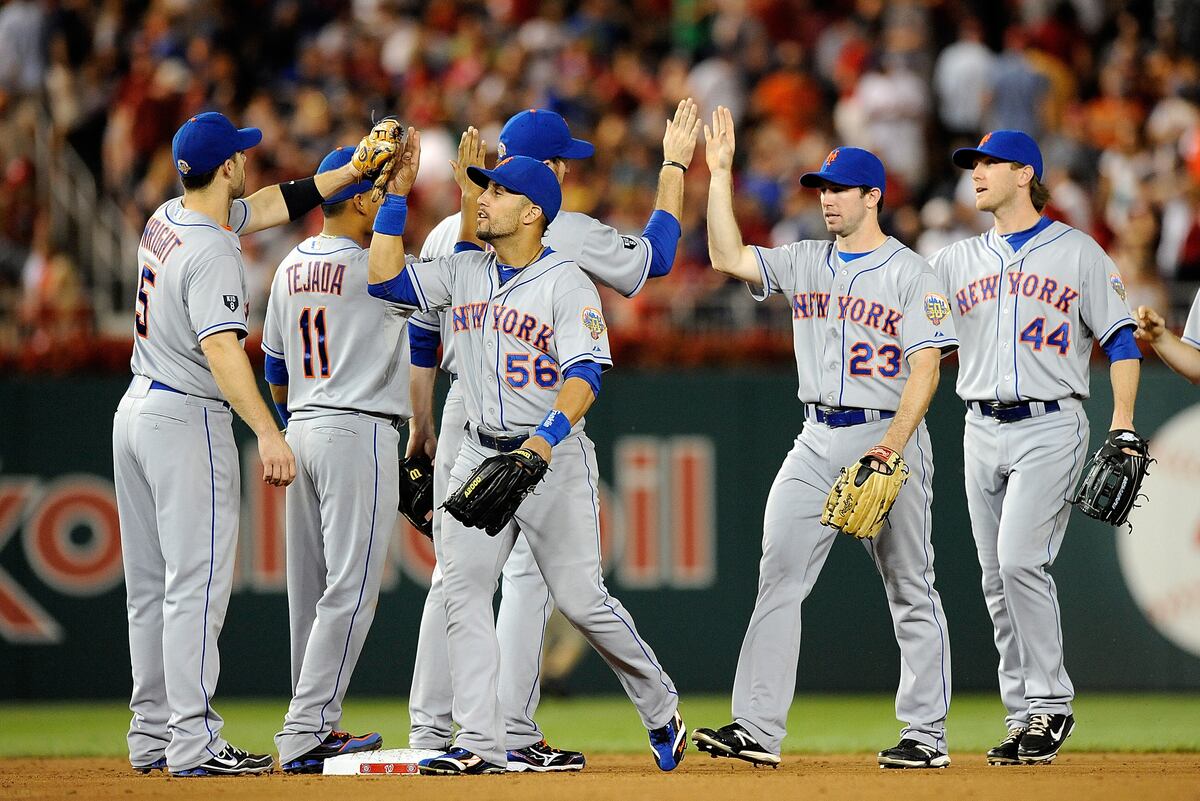
The New York Mets of 2012 were not a team built for immediate glory, but rather a patchwork quilt of potential stitched together in the wake of financial turbulence and organizational upheaval. As the franchise navigated the murky waters between fiscal prudence and competitive ambition, the roster emerged as a fascinating study in contrasts—a blend of seasoned veterans and unproven talents, all under the watchful eye of a new managerial regime. This was a team that played not with the swagger of a dynasty, but with the quiet determination of artisans shaping something enduring from raw materials. To understand the 2012 Mets is to peer into the alchemy of rebuilding, where every at-bat and defensive play was a brushstroke in a larger, still-unfinished masterpiece.
The Architecture of a Rebuild: A Team Forged in Fiscal Necessity
The 2012 Mets roster was, first and foremost, a product of constraint. After years of financial missteps and the looming specter of the Bernie Madoff scandal, ownership was forced to tighten its purse strings, trading away established stars like Carlos Beltrán and José Reyes in exchange for prospects and draft picks. The result was a roster that read like a who’s-who of baseball’s unheralded—players either past their prime or yet to reach it, all assembled in a high-stakes game of organizational chess. This was not a team designed to dazzle in the short term, but one engineered to endure the inevitable growing pains of a rebuild. The front office’s gamble was clear: sacrifice now, thrive later.
Yet, within this austerity, there was a peculiar beauty. The Mets of 2012 were a team of second chances—veterans like David Wright and Jason Bay clinging to relevance, while youngsters like Ike Davis and Lucas Duda were handed the reins to prove their mettle. It was a dynamic that mirrored the city itself: a metropolis where the old and new coexist in a delicate, often uneasy balance. The roster was a living, breathing testament to the idea that greatness is not always born from abundance, but can emerge from the crucible of necessity.
The Captain’s Gambit: David Wright’s Leadership in Uncertain Times
At the heart of this transitional squad was David Wright, the beleaguered captain whose tenure had been marred by injuries and the weight of unrealized expectations. By 2012, Wright was no longer the prodigious young slugger who had once carried the franchise, but a battle-scarred veteran navigating the twilight of his prime. His presence, however, was the glue that held the roster together—a steadying force in an era of flux. Wright’s .304 batting average and 185 hits were not just numbers; they were a defiant statement that excellence could still be extracted from adversity.
Wright’s leadership extended beyond the box score. In an era where the Mets were often defined by their struggles, he embodied the franchise’s resilience. His interactions with younger players, his willingness to shoulder the burden of a team in transition, and his refusal to succumb to the malaise of mediocrity made him the moral center of the 2012 squad. To watch Wright in 2012 was to witness a captain steering his ship through uncharted waters, his every move a lesson in perseverance.
The Youth Movement: Ike Davis and Lucas Duda’s Breakout Moments
If Wright was the anchor, then Ike Davis and Lucas Duda were the sails catching the winds of change. Davis, a first baseman with a cannon for an arm and a bat that could sting, arrived in New York with the weight of high expectations. His 2012 season was a rollercoaster—glimpses of brilliance punctuated by the inevitable stumbles of a player still finding his footing. Yet, when Davis connected, as he did in a 14-game stretch where he slashed .308/.400/.538, the Mets caught a fleeting glimpse of the franchise’s future.
Duda, meanwhile, was the antithesis of Davis’s raw power—a left-handed hitter with a keen eye and a knack for clutch hits. His .290 average and 15 home runs were modest by some standards, but in the context of a rebuilding team, they were a beacon of hope. Duda’s ability to deliver in high-leverage situations, particularly in the second half of the season, suggested that the Mets might have unearthed a diamond in the rough. Together, Davis and Duda represented the dual engines of the team’s offensive resurgence—a blend of power and precision that hinted at brighter days ahead.
The Pitching Paradox: A Rotation of Promise and Pitfalls
The Mets’ pitching staff in 2012 was a study in contradictions. On one hand, there was R.A. Dickey, the knuckleballer who defied convention and delivered one of the most improbable seasons in franchise history. Dickey’s 20-win campaign, 2.73 ERA, and Cy Young Award were not just outliers; they were a masterclass in reinvention. His ability to confound hitters with a pitch that seemed to dance on air made him the team’s lone bright spot in an otherwise dreary rotation.
Yet, beyond Dickey, the rotation was a graveyard of unfulfilled potential. Johan Santana, once the franchise’s ace, was a shell of his former self, hobbled by injuries and inconsistency. Jon Niese and Dillon Gee provided moments of stability, but their efforts were often overshadowed by the team’s offensive struggles. The bullpen, too, was a mixed bag—closer Frank Francisco’s 2.64 ERA belied his reputation for volatility, while setup men like Bobby Parnell and Josh Edgin offered fleeting glimpses of reliability. The pitching staff, in many ways, mirrored the roster as a whole: a collection of talents that never quite coalesced into a cohesive unit.
The Defensive Labyrinth: A Team of Contrasts in the Field
Defensively, the 2012 Mets were a team of stark contrasts. On one end of the spectrum was Daniel Murphy, a second baseman whose range and arm strength made him a defensive asset in an era where infield defense was often overlooked. Murphy’s ability to turn double plays and rob opponents of hits was a rare bright spot in an otherwise leaky unit. At third base, Wright’s defensive metrics were a mixed bag—his arm remained elite, but his range had diminished with age. The outfield, meanwhile, was a patchwork of strengths and weaknesses. Angel Pagan’s speed and arm were assets, but his routes to fly balls were often erratic. Lucas Duda, despite his offensive contributions, was a defensive liability in left field, a fact that limited his overall value.
The defensive inefficiencies of 2012 were not just statistical anomalies; they were a microcosm of the team’s broader struggles. The Mets were a team that often looked lost in transition, their defensive alignments a reflection of the organizational uncertainty that permeated the franchise. Yet, even in these flaws, there was a certain honesty—a refusal to mask mediocrity with smoke and mirrors. The Mets played the game as they found it, warts and all.
The Cultural Zeitgeist: A Team That Reflected Its City
To understand the 2012 Mets is to understand New York City itself—a metropolis of relentless energy, where dreams are forged in the fires of adversity and greatness is often a fleeting mirage. The Mets of that year were not a team of superstars, but a team of survivors. They played in a city that demanded excellence, yet offered little in the way of guarantees. Their struggles were not just a reflection of their own shortcomings, but a mirror held up to the financial and organizational turmoil that had gripped the franchise.
There was a certain romanticism to the 2012 Mets—a team that played not with the swagger of a dynasty, but with the quiet dignity of artisans shaping something enduring. They were a team that refused to be defined by their failures, even as those failures loomed large. In a city that thrives on reinvention, the Mets of 2012 were a reminder that greatness is not always measured in wins and losses, but in the resilience of those who dare to dream.
The Legacy of 2012: A Foundation for the Future
The 2012 Mets were not a team that would be remembered for their glory, but for their grit. They were the bridge between the franchise’s storied past and an uncertain future—a team that laid the groundwork for the resurgence that would follow. The lessons of 2012 were not just about baseball; they were about the nature of rebuilding itself. They were about the value of patience, the importance of leadership, and the quiet dignity of playing the game the right way, even when the results were not immediately apparent.
In the grand tapestry of Mets history, 2012 was a single thread—a necessary, if unglamorous, chapter in the franchise’s ongoing narrative. It was a year that tested the mettle of players and fans alike, a year that demanded belief in the face of overwhelming odds. And though the wins may not have stacked up in the standings, the intangible lessons of that season would echo through the years, a testament to the enduring spirit of a team that refused to surrender to the shadows of its past.