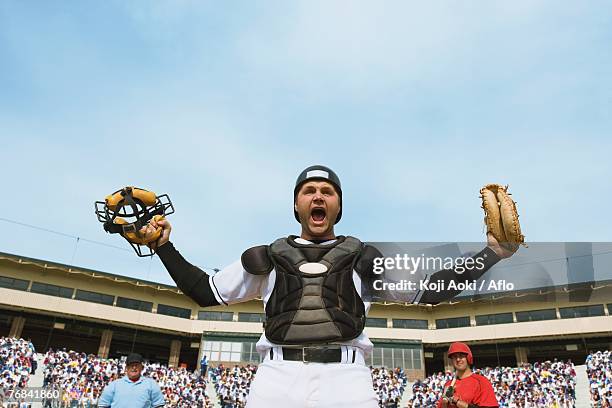
In the grand chessboard of baseball, every piece carries its own distinct prowess, each contributing to the symphony of athleticism and tactical brilliance that defines the game. Among these qualities, two attributes often captivate fans and analysts alike: blistering speed and a cannon of an arm. They represent the dual peaks of physical excellence—one a fleeting gust of wind on the basepaths, the other a thunderclap across the diamond. This exploration delves into the riveting contrast between the fastest player in baseball and the most formidable arm, unveiling the unique allure each brings to Major League Baseball’s ever-evolving narrative.
The Meteoric Swiftness: Defining the Fastest Player
Speed in baseball is more than mere velocity; it is the art of kinetic mischief, a blur that distorts the perceptions of opponents and redefines the possibilities within the confines of the field. The fastest player is a living embodiment of kinetic poetry, orchestrating chaos with every stolen base, every daring dash, and every electrifying steal of home. This illusionist transforms seconds into fractions, challenging pitchers, catchers, and fielders to react with unprecedented alacrity. Speed is measured not only in raw sprint velocity but in quickness off the mark, inthat explosive initial burst, and the capacity to sustain pace while weaving through adversaries.
Players like Byron Buxton or Tim Locastro have carved reputations for their explosive first-step acceleration—akin to a panther ready to pounce. Their speed can be the decisive fulcrum, shifting the momentum of a game in the blink of an eye. Yet, speed is a mercurial commodity, often fleeting and vulnerable to the ravages of injury or age, making each swift appearance all the more priceless.
The Indomitable Cannon: The Strongest Arm in the Outfield
While speed dances along the basepaths, arm strength stands as a towering sentinel in the defensive fortress of baseball. The strongest arm is comparable to a siege cannon, capable of launching projectiles with unerring precision and raw power, thwarting the ambitions of baserunners who dare to test its range. Unlike speed, which is ephemeral and swift, arm strength reverberates with a resonant confidence that can control the rhythm of the entire field.
In outfield positions such as right field, arm strength is a necessity. The strongest arms in MLB—exemplified by players like Aaron Judge or Giancarlo Stanton—possess the ability to hurl baseballs over 400 feet, turning potential doubles into outs and reigning in runners with a terrifying immediacy. Their throws are not mere tosses but declarations, commands sent across the diamond that deter—and often immobilize—the opposition’s advance. This attribute offers a blend of brute force and supreme technique, demanding precise footwork, impeccable timing, and a harmonious coordination between shoulder and hand.
The Tactical Dance: Speed and Arm Strength as Counterpoints
Baseball thrives on a delicate equilibrium between offense and defense, wherein speed and arm strength function as complementary forces, locked in a perpetual duel of invention and countermeasure. The fastest player embodies fluid motion, elusive and incendiary, relentless in pursuit of bases stolen and runs scored. Opposing this is the strongest arm, a kinetic barrier, an ever-present threat capable of snuffing out the fiery advances of speedsters.
This interplay creates a dynamic tension that defines key moments—an ultra-quick center fielder racing to catch a fly ball, then instantly unleashing a laser to gun down a desperate runner attempting to stretch a single into a double. Or a daring base stealer reading the nuances in a catcher’s throw and the arm of the outfielder, timing their dash with surgical precision. Here, speed is the spark, and arm strength is the cold steel that balances the game’s fiery tempo.
The Physiological Foundations: What Fuels Speed and Power?
Speed and arm strength stem from distinct physiological underpinnings. The fastest players harness an extraordinary combination of fast-twitch muscle fibers, neuromuscular coordination, and explosive anaerobic energy. Their training blends sprint mechanics with agility drills, emphasizing rapid acceleration and deceleration. In contrast, the strongest arms derive power from the integrity and strength of shoulder girdle muscles, rotational torque generated by the core, and the kinetic chain that extends from legs to fingertips.
These divergent biological templates underscore the uniqueness of each player’s craft. Speed demands a lithe, often leaner frame optimized for rapid locomotion, while the strongest arms benefit from robust musculature and joint stability that supports repeated high-velocity throws. The training regimens emphasize these contrasts; sprinters employ plyometric and resistance training that hones explosive movement, whereas power throwers focus on weighted ball exercises, scapular stabilization, and biomechanical efficiency.
The Aesthetic and Cultural Magnetism of Speed and Arm Power
Both speed and arm strength command a special reverence within baseball’s cultural lexicon. Speed evokes imagery of untamed freedom, a proverbial wild horse galloping across verdant expanses—unpredictable, breathtaking, and quintessential to the game’s roots in raw athleticism. It appeals to purists who cherish the small-ball strategies of yesteryears, where stolen bases and hit-and-runs painted a portrait of cunning and daring.
Conversely, arm strength resonates with a raison d’être tied to the heroic and mythic. The outfield cannon is the ultimate guardian, a sentinel wielding a weapon capable of altering outcomes with a single, thunderous act. It symbolizes a synthesis of precision, power, and fearlessness. Fans marvel as if witnessing a gladiator’s mighty throw, an emblem of resilience and defensive mastery.
Modern Metrics and the Quantification Paradigm
In today’s analytics-driven era, traditional admiration blends with data-rich assessments to quantify speed and arm strength more comprehensively. Statcast technology has revolutionized the measurement of sprint speed, bringing granularity down to feet per second and leveraging advanced tracking to analyze routes and acceleration. Similarly, arm strength is across quantified by throw velocity and accuracy metrics, along with outfield assists and expected outs, enabling deeper insights into defensive impact.
This fusion of science and spectacle enhances appreciation and allows teams to strategically value these traits in player acquisition and development. It paints a vivid portrait that transcends anecdote, translating physical gifts into tangible, game-altering statistics.
The Synthesis: When Speed and Arm Strength Collide
Rare and electrifying are the players who possess both elite speed and a formidable arm. They become multifaceted weapons, capable of turning defense into offense in a heartbeat. Imagine a center fielder who not only covers vast swaths of territory but can also deter runners from advancing with a laser bolt; such athletes embody the apotheosis of baseball’s physical demands.
These polymath players often redefine positional value and inspire new strategic paradigms. Their versatile athleticism challenges conventional wisdom and fuels baseball’s evolutionary journey, reminding spectators and participants alike that the sport is as much about adaptation as it is tradition.
In the theater of baseball, the fastest player and the strongest arm perform a compelling duet—two forces, distinct yet interwoven, breathing life into the game’s ceaseless drama. Their contrasting yet complementary natures enrich every inning, every play, and every season, cementing their status as timeless embodiments of baseball’s enduring magic.