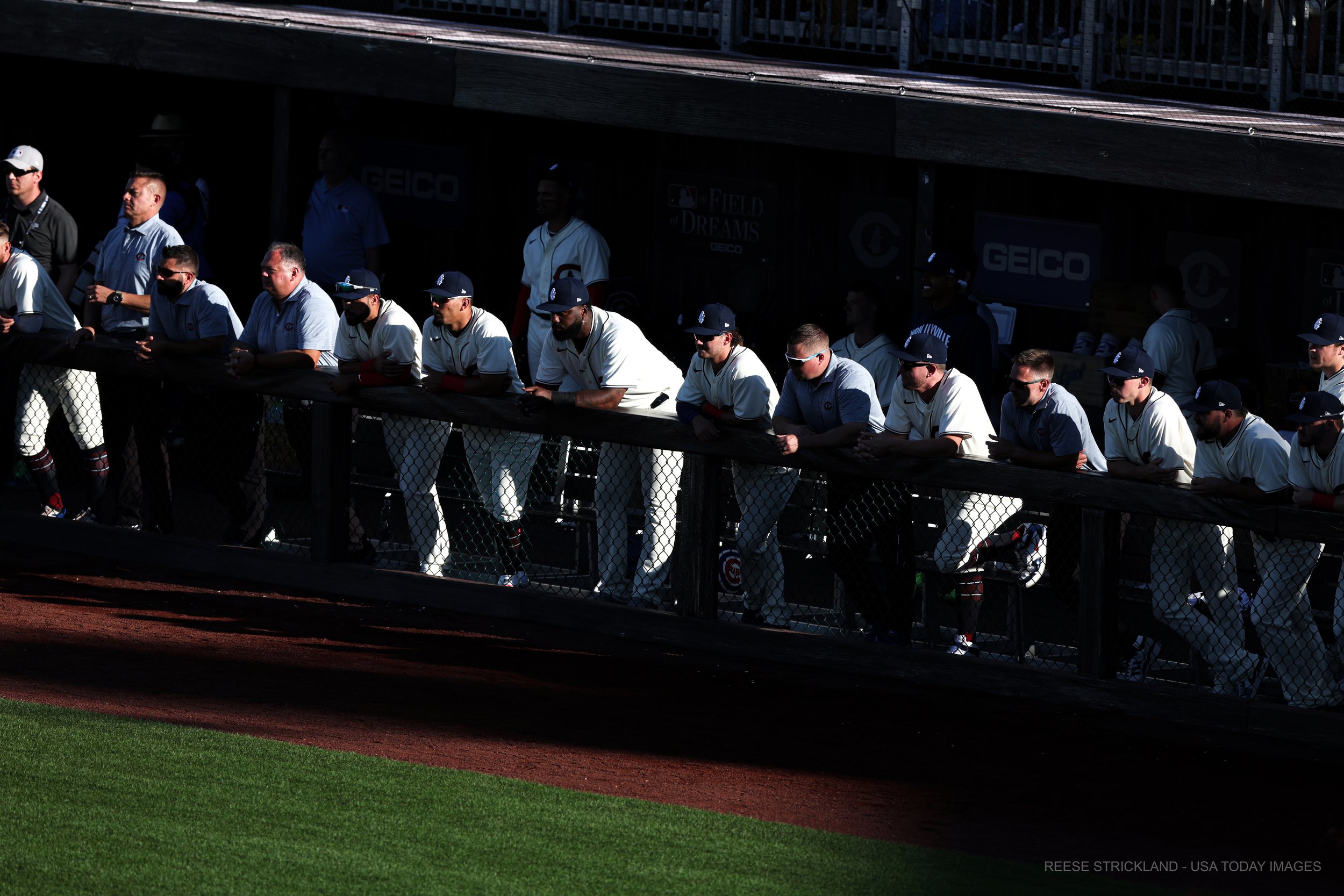
Baseball has always been more than just a game. It’s a tapestry of nostalgia, myth, and the quiet promise of summer evenings stretched into eternity. Yet, once every few years, Major League Baseball (MLB) gifts fans a spectacle so transcendent, so steeped in the ethereal, that it transcends the sport itself. The “Field of Dreams” game is not merely an exhibition—it’s a pilgrimage, a cinematic resurrection, and a masterclass in how to make the past feel alive. More than a baseball game, it’s a cultural reset, a moment where the crack of the bat echoes through the cornfields of Iowa and into the collective consciousness of a nation.
The Illusion of Time: When Fiction Becomes Reality
Every summer, MLB transports a single game from the sterile confines of modern stadiums to a patch of earth where the air hums with the whispers of 1989. The “Field of Dreams” game is a temporal paradox—a living diorama where Ray Kinsella’s fictional diamond in the cornfield becomes a stage for the game’s greatest legends. There’s no jumbotron, no synthetic crowd noise, just the unfiltered symphony of a baseball game played under the open sky. The absence of commercialism is jarring, almost sacrilegious in an era where even the seventh-inning stretch feels choreographed. Yet, that’s the genius of it. The game doesn’t just honor baseball’s past; it erases the present, if only for nine innings.
The players, too, are complicit in this illusion. When Shohei Ohtani steps into the batter’s box or when a grizzled veteran like David Ortiz takes a swing, they’re not just performing—they’re channeling something older than their careers. The field itself seems to exhale, as if the very soil remembers the ghosts of legends who never played there. It’s not just baseball; it’s baseball as séance.
The Cornfield as Cathedral: A Sacred Space for the Faithful
To stand in that cornfield is to understand why baseball is called America’s pastime. The rows of maize aren’t just a backdrop; they’re a congregation. The silence between pitches is thicker than the humidity on a July afternoon. There are no distractions—no mascot races, no drone light shows—just the visceral connection between the game and the land. The field isn’t a stage; it’s an altar, and the players are acolytes delivering a sermon in cleats and gloves.
This is baseball stripped of its modern armor. No replay reviews, no pitch clocks, no robotic umpires. The game unfolds at the pace of a summer novel, where every stolen base feels like a stolen moment from another era. The crowd, too, participates in the reverence. They don’t cheer; they murmur. They don’t boo; they sigh. The “Field of Dreams” game doesn’t just entertain—it elevates, turning spectators into pilgrims and a simple baseball game into a secular ritual.
The Players: Mortals Playing with the Gods
What makes the “Field of Dreams” game so mesmerizing is the way it transforms its participants. These aren’t just athletes; they’re time travelers, even if only for a day. When a player like Aaron Judge or Mookie Betts steps onto that field, they’re not just representing their team—they’re standing in the footsteps of legends who never walked the same grass. The pressure isn’t just to win; it’s to honor the game’s mythology.
And then there are the moments that defy explanation. The way a player’s eyes flicker toward the corn as if expecting Shoeless Joe Jackson to emerge. The way a home run soars into the night, not just clearing the fence but vanishing into the dark like a wish. These aren’t just athletic feats; they’re acts of communion. The players know it. The fans know it. Even the umpires, in their black coats, seem to move with the gravity of priests conducting a rite.
The Soundtrack of a Ghostly Summer: Soundscapes That Haunt
Baseball has always been a game of sights and sounds, but the “Field of Dreams” game distills those senses into something almost supernatural. The crack of the bat isn’t just heard—it’s felt, vibrating through the chest like a struck tuning fork. The murmur of the crowd isn’t just noise; it’s the hum of a thousand conversations from a thousand different eras, all blending into one. Even the wind through the corn carries the weight of history, rustling like the pages of an old scorebook.
There’s a reason the game’s most iconic moment isn’t a home run or a diving catch—it’s the silence that follows a pitch. When a player like Francisco Lindor steps into the box, the entire field holds its breath. The absence of artificial noise makes the moment feel intimate, as if the game itself is leaning in to listen. It’s not just baseball; it’s baseball as a séance, where every pitch is a whispered question and every swing is an answer from the beyond.
The Ripple Effect: How One Game Transforms the Sport
The “Field of Dreams” game isn’t just a one-off spectacle—it’s a catalyst. It forces MLB to confront what it’s become: a league obsessed with analytics, speed, and spectacle at the expense of soul. For one magical afternoon, the sport remembers that baseball isn’t just a business; it’s a story. And stories, unlike spreadsheets, have the power to linger in the mind long after the final out.
It also redefines what it means to be a fan. In an era where sports are increasingly consumed through screens and algorithms, the “Field of Dreams” game reminds us that baseball’s magic is tethered to the earth. You can’t stream this experience. You can’t pause it. You have to be there, breathing in the dust of a field that exists both in the present and the past. It’s a humbling reminder that the game belongs to the fans, not the suits in the boardroom.
The Future: Can MLB Keep the Magic Alive?
The challenge, of course, is replicating this alchemy. The “Field of Dreams” game works because it’s rare—a unicorn in a league that often feels more like a corporation. But what if MLB dared to make it a tradition? What if every season featured a game in a place where history and myth could collide? Imagine a “Lambeau Field” of baseball, where the ghosts of Babe Ruth and Willie Mays could share the same diamond. The potential is limitless.
Yet, the risk is commodification. The moment the “Field of Dreams” game becomes just another event on the calendar, it loses its power. The magic thrives in scarcity, in the knowledge that this isn’t just another game—it’s a fleeting glimpse into baseball’s soul. MLB must resist the urge to overproduce, to turn this sacred space into just another stop on the tour. The game’s power lies in its impermanence, in the way it feels like a secret shared between the sport and its most devoted followers.
Conclusion: A Love Letter to Baseball’s Eternal Soul
The “Field of Dreams” game is more than a gimmick or a marketing ploy. It’s a love letter to baseball’s eternal soul, a reminder that the sport is more than statistics and salaries—it’s a living, breathing entity that transcends time. In a world where everything is measured and monetized, this game offers something rare: purity. No algorithms. No gimmicks. Just the crack of the bat, the whisper of the corn, and the unshakable feeling that, for one night, the past and present have merged into something beautiful.
Baseball has always been a game of memories. The “Field of Dreams” game doesn’t just create new ones—it stitches the old ones into the fabric of the sport itself. And that’s why it’s the best thing MLB does. Not because it’s perfect, but because it’s honest. Not because it’s flashy, but because it’s real. In a league that often forgets its own soul, this game is a beacon, a reminder of what baseball could—and should—always be.