In the symphony of baseball, where every motion dances with precision and every decision teeters on the edge of triumph or failure, baserunning often serves as the overlooked cadence that can turn the tide. Among the many nuances that young players wrestle with, one particular misstep echoes through the amateur diamonds like a recurring dissonance: the art of rounding the bag. This seemingly mundane motion, so often taken for granted, is in fact a pivotal element laden with potential for error. Understanding the anatomy of this mistake, and its profound consequences, not only elevates a young athlete’s prowess but enriches the game’s very rhythm.
The Metaphor of the Corner: Rounding the Bag as the Jazz Bridge in the Music of the Game
Picture baseball as a grand jazz performance. The straightaways—running from one base to the other—are the strong, steady beats anchoring the melody. Yet, the true artistry lies in the improvisational bridge: rounding the bag. This is the moment when a player must delicately balance aggression with grace, speed with control. A slight miscalculation here disrupts the harmony; it slows down the flow and invites the defensive team to capitalize. Just as an ill-timed note in jazz jars the listener, a clumsy turn around the base unsettles not only the runner but the entire offensive rhythm.
The Anatomy of Rounding the Bag: What Goes Wrong?
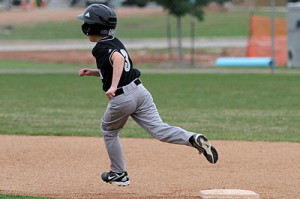
At its core, rounding the bag is an intricate maneuver involving approach angle, foot placement, body lean, and head positioning. Many youth players commit the most common error by either taking an inefficient path too wide or hugging the base too tightly without preparing for acceleration toward the next base. This often stems from a lack of comprehension about the geometric nature of the journey. The objective isn’t merely to make contact with the base but to use it as a pivot point—a springboard to unleash further momentum.
When runners fail to anticipate their transition past the base, they lose precious seconds. The difference between a carefully crafted, fluid turn and a cumbersome one is often a few fractions of a second—enough to turn a sure safe into a bitter out. Poor upper-body posture exacerbates this; a hunched or upright stance compromises balance and agility. The runner leans too far in or away, causing instability and diminished push-off ability.
The Psychological Factors Behind Misjudged Turns
Beyond physical mechanics, the mental approach to rounding the bag plays an equally formidable role. Many young athletes wrestle with fear: the fear of over-committing and being tagged out, or the hesitation born from inexperience that leads to anxious, second-guessing footwork. This mental paralysis replaces confident rhythm with a mechanical shuffle, slowing momentum.
Additionally, the adolescent mind is still learning to process spatial awareness at game speed. Estimating the distance from the fielder, the ball’s trajectory, and the impending urgency all compete for cognitive bandwidth. This cognitive overload frequently manifests as erratic pathing around the base, resulting in costly slowdowns or even collisions with defensive players.
Training Precision: Teaching the Geometry of the Base Path
Effective coaching in youth baseball has to transcend rote repetition and delve into the geometrical essence of baserunning. Instead of focusing solely on speed, training should incorporate the concept of the base as a tangent point on an elliptical trajectory. The curved route around the bag, if approached with mathematical precision, minimizes travel time by shortening the path while maximizing push-off efficiency.
Drills that emphasize proper angling, foot placement, and body positioning can rewire the athlete’s muscle memory. For instance, cone drills simulating the base’s curvature teach runners to “cut the corner” smartly without compromising control. Video analysis further enhances awareness, allowing players to visualize the subtle differences between their current technique and an optimal rounding form.
Case Studies: The Ripple Effect of Small Errors
In professional baseball, meticulous baserunners have turned close games through flawless execution around the bases. Conversely, young players often see these fundamental mistakes manifest in amplified frustration and lost opportunities. One overlooked misstep—rounding the bag with poor technique—can cascade into additional errors such as missed steal attempts, balked pickoffs, or strained backs accompanying awkward landings.
When a player loses balance or momentum rounding second base, it affects not just their individual progress but the entire team’s strategic arsenal. Coaches may hesitate to send the runner on hit-and-run plays or steal attempts, fearful that suboptimal baserunning will yield outs rather than the desired offensive pressure. Thus, a seemingly minor technical flaw can restrict an offense’s dynamism, impacting team morale and performance.
The Unique Appeal: Why Mastering This Skill Elevates the Game
Mastering the finesse of rounding the bag is akin to unlocking a secret passage in the labyrinth of baseball. It empowers players with a nuanced weapon—an ability to challenge defenses not just with raw speed but with calculated cunning. Players gain both tangible benefits, such as improved advancement and scoring potential, and intangible assets like heightened confidence and on-field intelligence.
Moreover, this skill embodies baseball’s intricate dance between strategy and athleticism. It exemplifies how mastery is measured not solely by the power of a swing or the velocity of a pitch but by the grace with which a player navigates the base paths. This elegant balance elevates the sport beyond mere competition into an art form, inspiring the next generation to appreciate and cultivate the subtle beauty embedded in every rounded base.
Conclusion: Refining the Craft to Transform the Future
In the grand tapestry of youth baseball development, rounding the bag stands out as the fulcrum upon which success pivots. It is more than a mechanical skill; it is a lesson in timing, geometry, and poise. Coaches, parents, and players who invest in refining this seemingly small detail lay the groundwork for a trajectory of growth that extends into higher levels of play.
In embracing the artistry and science of baserunning, young athletes don’t just enhance their own game—they honor the timeless rhythm of baseball itself. They learn that greatness often hides in the nuances. So, next time a runner rounds second base, it is not merely a transition but a decisive, dance-like statement of skill—one that can echo through innings and championships alike.