In the ever-evolving tapestry of Major League Baseball, where legends are born and departed with rhythmic cadence, a new name begins to resonate with both reverence and anticipation: Riley Greene. Heralded not merely for his prodigious talent but for the paradigm shift he represents within the sport, Greene’s rise encapsulates more than just statistical prowess—it signals a renaissance in how baseball’s future stars are perceived and cultivated. His emergence is not a mere addition to MLB’s roster of talents; it is an emblematic narrative promising to alter the very lens through which fans and experts alike evaluate greatness.
The Genesis of a Phenomenon
Riley Greene’s prologue commenced long before his Major League debut; it is a tale rooted in unwavering dedication and an intrinsic understanding of baseball’s nuanced art. Apprenticing through the minor leagues, Greene’s journey was marked by an alchemical blend of raw power and refined technique. Unlike many prospects whose trajectories fluctuate wildly, Greene exhibited a rare consistency, an attribute that distinguished him early on. His adeptness at the plate combined an astringent eye for strike-zone discipline with explosive swing mechanics, an unusual amalgam that presaged his ascendancy.
Yet, it is essential to recognize how Greene’s development is emblematic of a larger shift in talent nurturance within baseball’s infrastructure. The modern era prizes multifaceted athletes who transcend traditional role expectations. Greene embodies this shift—his agility in the outfield, strategic baserunning, and innate baseball IQ contribute to a holistic skill set that challenges archaic paradigms of player evaluation.
Redefining the Role of the Young Star
Historically, young phenoms have struggled under the unbearable weight of expectation, often succumbing to the ‘sophomore slump’ or fading under the glare of hyperbole. In contrast, Riley Greene’s narrative defies this archetype with a paradigm that emphasizes adaptive growth and psychological resilience. His performance showcases an uncommon maturity, an ability to recalibrate in real-time against the continual strategic evolutions deployed by opposing pitchers and defenses.
This maturity is not merely the product of physical aptitude; rather, it reflects a conscientious approach to the mental dimension of the game. By embracing data analytics, immersive video study, and psychological conditioning, Greene has cultivated a compendium of tools that elevate his on-field performance. Thus, he emerges not just as a youthful prodigy but as a vanguard of the modern baseball ethos—a confluence of intellect, analytics, and athleticism.
Statistical Alchemy: From Numbers to Narrative
Metrics often serve as the lingua franca in contemporary sports discourse, yet Greene’s statistics tell a story that transcends mere numbers. His batting average, on-base percentage, and slugging metrics each weave a narrative of escalating dominance, but the true intrigue lies in the granularities. Greene’s plate discipline manifests in his strikeout-to-walk ratio, reflective of an inherent patience uncommon in players of his age and tenure. Simultaneously, his launch angle and exit velocity data demonstrate an ability to convert contact into impact consistently, underscoring a synthesis of power with precision.
Moreover, Greene’s defensive analytics are equally compelling. His range factor and Defensive Runs Saved (DRS) metrics illustrate not only physical capability but also superior positioning intelligence and anticipation. This multi-dimensional excellence beckons a reevaluation of traditional statistical hierarchies, urging enthusiasts to appreciate the symbiosis between quantitative analysis and qualitative insight in charting a player’s true value.
Cultural and Market Impact: Beyond the Diamond
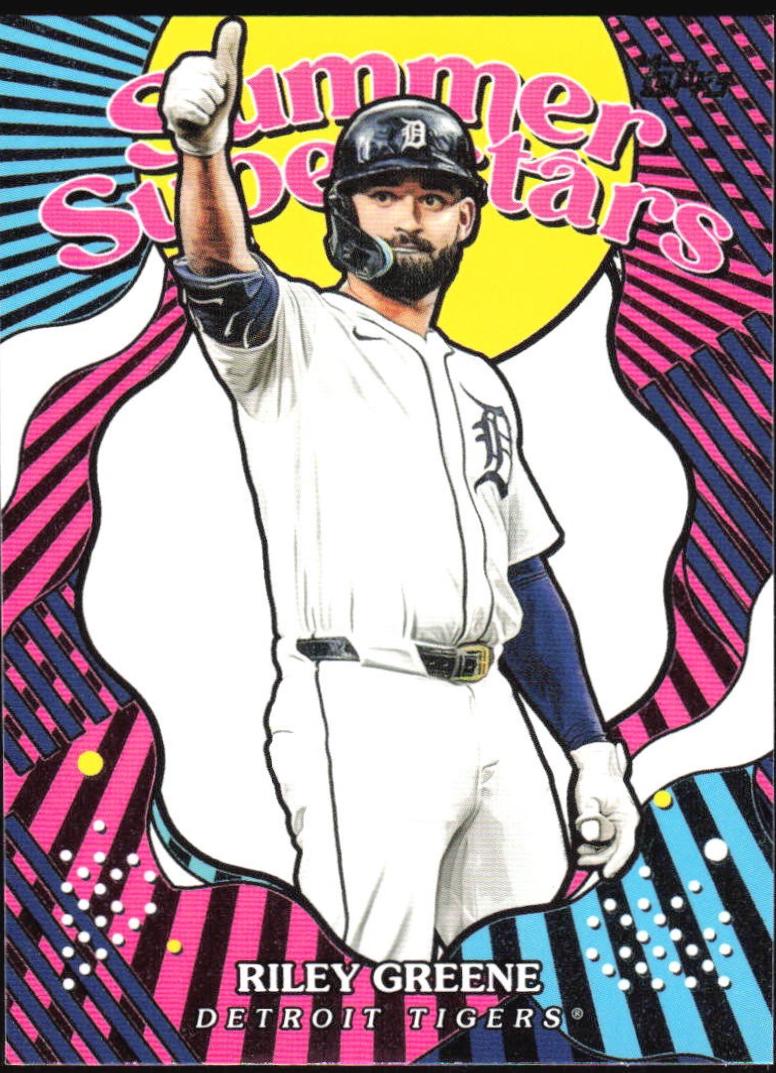
Riley Greene’s ascent reverberates beyond the parameters of gameplay. In a cultural milieu increasingly defined by athlete activism, branding acumen, and media savviness, Greene stands as a potent symbol of baseball’s evolving identity. His approachable persona coupled with quiet confidence cultivates a resonance among fans, especially younger demographics craving authentic role models. This cultural capital intertwines with market dynamics, as Greene’s memorabilia and trading cards have swiftly become coveted assets.
Indeed, his burgeoning market impact is testament to a wider phenomenon—a reinvigoration of baseball’s place within the American sporting landscape. As other sports combat waning youth engagement, Greene’s emergence sparks renewed interest, bridging generational divides and revitalizing patriotic fervor in baseball’s quintessential narrative of the American dream.
Anticipating the Trajectory: A Future Forged in Potential
Every prodigy’s tale hinges on the enigmatic future—unfolding with a blend of expectation and uncertainty. Riley Greene’s trajectory, however, is buoyed by a foundation as robust as it is promising. The key to his sustained ascendance lies in adaptability—embracing evolving pitching strategies, handling physical wear, and maintaining psychological equilibrium amidst mounting pressure.
The baseball community watches with bated breath, intrigued by how Greene will navigate the crucible of professional maturation. Will he refine his power-hitting arsenal, deepen his defensive repertoire, or emerge as a clubhouse vanguard, inspiring through leadership? The possibilities coalesce into an enthralling prospectus, one that promises to continually reshape narratives around age, talent development, and superstar genesis.
The Paradigm Shift: Reshaping Expectations of MLB Superstars
Riley Greene’s emergence invites a broader contemplation on what it means to be a superstar in Major League Baseball today. Traditional archetypes—often rigidly defined by singular skills or flamboyant personalities—give way to a more nuanced, multidimensional ideal. Greene epitomizes this shift: a player whose ascendancy challenges entrenched stereotypes and broadens conceptions of athletic heroism.
This paradigm shift has implications extending to scouting methodologies, fan engagement, and cross-generational storytelling. By embodying a synthesis of raw talent, analytical savvy, and cultural resonance, Greene not only promises to redefine statistical and stylistic benchmarks but also to inspire a reimagining of baseball’s future luminaries.
In the unfolding chronicles of Major League Baseball, Riley Greene represents more than just the emergence of a singular talent; he heralds a transformative epoch, wherein the convergence of skill, intellect, and ethos proffers a compelling new narrative—one that beckons fans and analysts alike to reconsider the very essence of what it means to be a superstar.