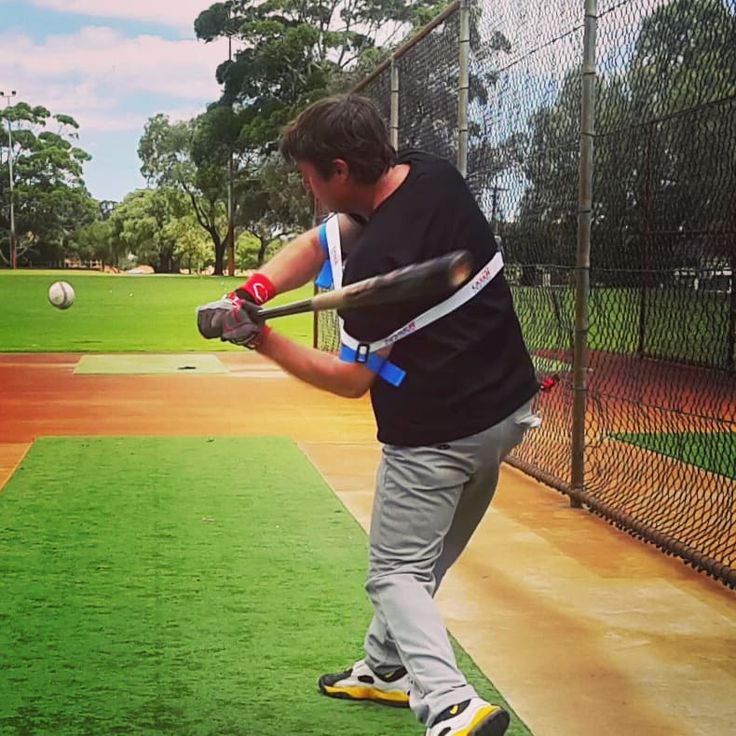
Imagine stepping into the batter’s box, the pitcher winding up with that sneaky fastball you’ve been struggling to catch up to all season. The crack of the bat echoes as the ball soars into the outfield—only this time, it’s not just a lucky swing. What changed? The answer might be hiding in the weight room, where the real magic happens long before the game begins. But here’s the kicker: not all exercises are created equal when it comes to translating raw strength into explosive bat speed. So, what if the key to unlocking your next-level power isn’t just about swinging harder, but lifting smarter?
The Myth of the “Just Swing More” Approach
For decades, the baseball world has been fed a steady diet of the same old adage: “Swing more, and you’ll get better.” While repetition is undeniably crucial for muscle memory and timing, it’s a half-truth at best. The modern MLB hitter isn’t just a metronome of mechanical precision—they’re a kinetic marvel, a symphony of explosive force generated from the ground up. The problem? Most players treat the weight room like an afterthought, a place to “maintain” rather than “optimize.” But what if the exercises you’ve been doing are actually holding you back?
Consider this: a study from the Journal of Strength and Conditioning Research found that traditional isolation exercises—like bicep curls or tricep extensions—have negligible impact on bat speed. Meanwhile, compound lifts that engage the posterior chain, hips, and rotational core show a direct correlation with increased exit velocity. The takeaway? Your biceps might look impressive in the mirror, but they’re not doing much to help you drive the ball out of the park.
Rotational Power: The Unsung Hero of Bat Speed
Bat speed isn’t just about how hard you can swing—it’s about how efficiently you transfer energy from your lower body through your torso and into the bat. This is where rotational power comes into play, a force that separates the good hitters from the great ones. The weight room is the perfect laboratory to cultivate this skill, but only if you’re targeting the right muscles.
Enter the landmine press, a deceptively simple exercise that forces your body to generate rotational force under load. Unlike a traditional bench press, which locks you into a linear plane of motion, the landmine press mimics the natural rotation of a swing. Start with a light weight, set up a barbell in a landmine attachment, and press upward while resisting the urge to let your torso twist too early. The key is controlled deceleration—think of it as teaching your body to “brake” at the right moment, just like the moment before contact when your swing transitions from acceleration to impact.
Another game-changer? The rotational medicine ball slam. Grab a weighted ball, set up in your batting stance, and explode into a throw, focusing on driving through your back hip and finishing with your front shoulder. The goal isn’t just to throw the ball as hard as possible—it’s to replicate the whip-like motion of a swing. Do this for three sets of 10 reps per side, and you’ll start to feel the difference in your hands the next time you step up to the plate.
The Posterior Chain: Your Secret Weapon
If you’ve ever watched a highlight reel of a 110-mph exit velocity swing, you’ve probably noticed something striking: the hitter’s back leg is a coiled spring, ready to unleash its energy in a fraction of a second. That spring is your posterior chain—the glutes, hamstrings, and lower back working in unison to generate explosive force. Yet, most players neglect this powerhouse in favor of flashy upper-body lifts.
To fix this, prioritize the Romanian deadlift. This exercise isn’t just for bodybuilders chasing a bigger deadlift—it’s a foundational movement for building the eccentric strength needed to load and explode during your swing. Start with a moderate weight, hinge at the hips, and lower the bar while keeping your back flat and your chest up. The key is to feel a deep stretch in your hamstrings, not just your quads. Do 4 sets of 6-8 reps, and you’ll start to notice your stride length and power output improving almost immediately.
Don’t sleep on the single-leg glute bridge either. This underrated exercise targets the glutes in a way that mimics the push-off phase of your swing. Lie on your back, place one foot on the ground, and drive through your heel to lift your hips. Hold for a second at the top, then lower slowly. The goal is to feel your glutes firing, not your lower back compensating. Aim for 3 sets of 12 reps per leg, and watch as your rotational stability skyrockets.
The Core: More Than Just a Six-Pack
Your core isn’t just a set of washboard abs—it’s the transmission of your swing, the conduit that transfers power from your lower body to your upper body. Yet, most players treat it like an afterthought, hitting up a few crunches before calling it a day. If you want to add serious pop to your swing, you need to train your core for anti-rotation and rotational stability.
Enter the Pallof press, a brutal but brilliant exercise that forces your obliques and deep core muscles to resist rotation under load. Set up a cable or band at chest height, grab the handle with both hands, and press it straight out in front of you. Resist the urge to let your torso twist—this is where the magic happens. Hold for 2-3 seconds, then slowly return to the starting position. Do 3 sets of 10 reps per side, and you’ll start to feel your swing become more compact and controlled.
For a dynamic challenge, try the cable woodchopper. Set the cable at shoulder height, grab the handle with both hands, and rotate your torso to bring the weight from one side to the other. The key is to move with control, not speed—think of it as a slow-motion version of your swing. Do 3 sets of 12 reps per side, and you’ll start to notice your hands staying tighter to your body during the load phase.
The Trap: Overloading the Upper Body
It’s tempting to load up on bench presses and pull-ups, convinced that a bigger chest and stronger arms will translate to more power at the plate. But here’s the hard truth: upper-body strength alone won’t make you a better hitter. In fact, it might even hinder your progress by creating imbalances that lead to inefficiencies in your swing.
Instead of chasing a bigger bench press, focus on horizontal pressing variations that emphasize scapular retraction and thoracic extension. The bench press with a pause is a great place to start. Lower the bar to your chest, pause for a full second, then press up explosively. This teaches your body to generate force from a dead stop, a skill that directly translates to the sudden acceleration needed in a swing.
For the upper back, the face pull is a must. Set up a cable at eye level, grab the rope attachment, and pull it toward your forehead while flaring your elbows out to the sides. The goal is to feel your rear delts and rotator cuffs firing, not just your traps. Do 3 sets of 15 reps, and you’ll start to notice your shoulder mobility improving, which is crucial for maintaining a strong, stable swing plane.
The Recovery Paradox: When More Isn’t Better
Here’s a counterintuitive truth: the weight room isn’t just about lifting heavy—it’s about lifting smart. Overtraining can lead to fatigue, which in turn can sap your power output and increase your risk of injury. The key is to find the sweet spot between stimulus and recovery, where your body adapts and grows stronger.
Start by tracking your readiness metrics—sleep quality, perceived exertion, and soreness levels. If you’re constantly feeling drained, it might be time to dial back the volume or intensity. Incorporate deload weeks every 4-6 weeks, where you reduce the weight by 30-50% and focus on technique. And don’t forget to prioritize mobility work, especially for your hips and thoracic spine, which are often the first to tighten up under the demands of a grueling season.
Finally, consider the role of contrast training. This involves pairing a heavy lift with a plyometric movement to enhance power output. For example, after a set of heavy squats, immediately perform a set of box jumps. The idea is to train your nervous system to fire faster, which can directly translate to quicker bat speed. Just be sure to keep the plyometric work fresh—fatigue kills explosiveness.
The Final Swing: Putting It All Together
So, what’s the secret to unlocking your next-level bat speed? It’s not a magic pill or a single exercise—it’s a holistic approach that combines rotational power, posterior chain dominance, core stability, and smart programming. The weight room isn’t just a place to get stronger; it’s a laboratory where you can fine-tune the kinetic chain that powers your swing.
Start by assessing your current routine. Are you spending too much time on isolation exercises? Are you neglecting your hips and glutes? Are you training your core for stability or just aesthetics? Once you’ve identified the gaps, plug in the exercises we’ve discussed and commit to the grind. Track your progress, adjust as needed, and most importantly, stay patient. Bat speed isn’t built in a day—it’s forged in the weight room, one rep at a time.
The next time you step into the batter’s box, ask yourself: Are you swinging harder, or are you swinging smarter? The answer might just change your game forever.