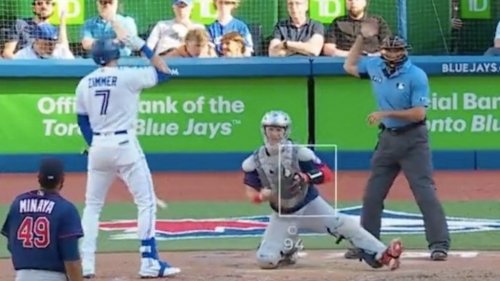
The crack of the bat is the symphony’s crescendo, the home run its standing ovation. Yet, tucked within baseball’s grand overture lies a quieter, more insidious note—the backdoor breaking ball. It doesn’t announce itself with the fanfare of a fastball or the theatrics of a curveball. Instead, it slithers in through the back door of the strike zone, a thief in the night, leaving hitters paralyzed and fans in awe. This isn’t just another pitch; it’s a psychological chess match, a duel of wits disguised as a game of inches. To understand its allure, we must peel back the layers of deception, strategy, and sheer audacity that make the backdoor breaking ball one of baseball’s most mesmerizing weapons.
The Art of the Backdoor: A Pitch That Defies Convention
In the lexicon of baseball, a “backdoor” pitch is one that starts outside the strike zone before bending back into it, catching the batter off guard. The breaking ball variant—often a slider or a curveball—adds a layer of complexity, its late movement making it nearly impossible to lay off. Unlike the high-arc curveball that hangs like a piñata or the sharp-breaking slider that dives like a startled eel, the backdoor breaking ball is a masterclass in subtlety. It doesn’t scream; it whispers, and by the time the hitter hears the message, it’s too late.
Imagine a painter deftly guiding a brushstroke just beyond the canvas’s edge, only for the stroke to curve inward at the last moment, completing the masterpiece. That’s the backdoor breaking ball—a pitch that begins its journey in the shadows before emerging into the light, a silent coup de grâce. Hitters, trained to react to the predictable, are left chasing shadows, their timing disrupted by a pitch that seems to defy physics. It’s not just a pitch; it’s a performance, a fleeting moment where strategy and execution collide in a burst of brilliance.
The Psychology of Deception: Why Hitters Can’t Resist
Baseball is as much a mental game as it is physical, and the backdoor breaking ball preys on the hitter’s cognitive biases. Studies in sports psychology reveal that batters are wired to expect pitches to follow a certain trajectory—fastballs rise, curveballs fall, sliders dart. When a breaking ball arrives from the opposite direction, it triggers a neurological hiccup. The brain, trained to anticipate, stumbles, and the hands, conditioned to react, lag behind. This isn’t just a mechanical failure; it’s a psychological ambush.
Consider the hitter’s dilemma: the pitch starts in the zone of “take,” a pitch they’ve been coached to ignore. But as it approaches, it dips, hooks, or slides back into the zone, forcing a split-second decision. Swing or lay off? The margin for error is razor-thin. Even the most disciplined hitters, those who pride themselves on pitch recognition, find themselves frozen. The backdoor breaking ball doesn’t just beat them; it outsmarts them, turning the batter’s own instincts against them. It’s a reminder that baseball isn’t won by strength alone—sometimes, it’s won by the art of misdirection.
The Pitcher’s Arsenal: Crafting the Perfect Backdoor
Executing a backdoor breaking ball requires more than raw talent; it demands precision, deception, and a deep understanding of the hitter’s weaknesses. Pitchers who master this pitch often have a keen sense of location, placing the ball just outside the zone before coaxing it back in. The grip is crucial—too much spin, and the pitch telegraphs its movement; too little, and it lacks the late break. A slider with a tight, late bite or a curveball with a pronounced downward arc are ideal candidates, their movement profiles lending themselves to the backdoor’s sly approach.
But technique alone isn’t enough. The pitcher must also read the hitter’s tendencies, exploiting their over-aggressiveness or their reluctance to chase. A hitter who lunges at outside pitches is ripe for a backdoor slider, while one who chases low offerings might be fooled by a backdoor curveball. The best pitchers don’t just throw the pitch; they sell it. They use their body language, their delivery, and even their facial expressions to sell the illusion of a ball before the pitch dives back into the zone. It’s a con artist’s charm, wrapped in the guise of a routine at-bat.
The Hitter’s Nightmare: Stories of Backdoor Betrayal
History is littered with moments where the backdoor breaking ball has etched itself into baseball lore. Take, for instance, the 2016 World Series, where Corey Kluber of the Cleveland Indians used a backdoor curveball to strike out Javier Báez, a hitter known for his aggressive swings. The pitch started low and outside, a ball in the eyes of most umpires. But as Báez lunged, the curveball hung just enough to dart back into the zone, catching the barrel of his bat for a harmless pop-up. The crowd groaned; Báez stared in disbelief. It was a masterclass in deception, a pitch that didn’t just get the better of a hitter—it humiliated him.
Or consider the 2001 postseason, when Randy Johnson, the towering lefty, froze Barry Bonds with a backdoor slider. Bonds, a hitter with legendary plate discipline, watched the pitch start outside before it dove back into the zone, leaving him flailing at thin air. The moment wasn’t just a strikeout; it was a statement. Johnson didn’t overpower Bonds with heat; he outthought him with guile. These aren’t just anecdotes; they’re testaments to the pitch’s power to elevate a game from routine to legendary.
The Evolution of the Backdoor: From Obscurity to Obsession
The backdoor breaking ball isn’t a modern invention, but its prominence has grown alongside baseball’s analytical revolution. As data and technology have given pitchers deeper insights into hitters’ tendencies, the backdoor has evolved from a novelty to a necessity. Coaches now study pitch-tracking systems like TrackMan and Rapsodo to refine their pitchers’ arsenals, identifying which hitters are most vulnerable to late-breaking pitches. The result? A generation of pitchers who don’t just throw breaking balls—they weaponize them.
Yet, for all its analytical underpinnings, the backdoor breaking ball retains an element of artistry. It’s a pitch that rewards creativity, intuition, and a willingness to take risks. In an era where baseball is increasingly dominated by velocity and launch angles, the backdoor breaking ball is a throwback—a reminder that the game’s beauty lies in its unpredictability. It’s the chess move in a sport of checkers, the jazz improvisation in a world of sheet music. And as long as there are hitters to be fooled and fans to be amazed, it will endure.
The Unwritten Rules: When the Backdoor Crosses the Line
Of course, not all deception is celebrated. Baseball has its unwritten rules, and the backdoor breaking ball, while brilliant, can sometimes be seen as unsportsmanlike. When a pitcher repeatedly uses the pitch to exploit a hitter’s weaknesses—especially in high-leverage situations—it can spark debates about sportsmanship. Is it clever strategy or cheap gamesmanship? The line is thin, and the answer often depends on perspective.
Some argue that the backdoor breaking ball is a fundamental part of the game’s strategy, a tool as valid as the fastball or the changeup. Others see it as a crutch, a way to avoid pitching to the hitter’s strengths. The truth likely lies somewhere in between. Like any weapon, the backdoor breaking ball is only as good as the intent behind it. When used to elevate the game, it’s a thing of beauty. When wielded with malice, it risks tarnishing the sport’s spirit. The challenge, then, is to strike a balance—to celebrate the pitch’s brilliance without losing sight of the game’s soul.
The Future of the Backdoor: Will It Survive the Analytics Age?
As baseball continues to embrace data and technology, the backdoor breaking ball faces an uncertain future. Advanced metrics can predict when a hitter is likely to chase a pitch outside the zone, potentially neutralizing the pitch’s effectiveness. Pitchers may need to adapt, mixing in more unconventional deliveries or varying their pitch sequences to keep hitters off-balance. The backdoor breaking ball might become a relic, a pitch of the past in a sport obsessed with optimization.
Yet, baseball has always been a game of adaptation. Just as the spitball faded into obscurity and the knuckleball became a novelty, the backdoor breaking ball could evolve into something new. Perhaps it will merge with other pitches, creating hybrid offerings that blend the backdoor’s deception with modern velocity. Or maybe it will remain a cherished secret, a pitch reserved for the most audacious pitchers and the most desperate moments. Whatever its fate, the backdoor breaking ball will always hold a special place in the game’s history—a testament to the power of deception, the thrill of the unexpected, and the enduring allure of baseball’s hidden artistry.