In the high-stakes world of baseball, where milliseconds dictate outcomes, the catcher’s pop time—the duration from receiving a pitch to throwing out a runner—has become a metric of unparalleled significance. No longer confined to the realm of anecdotal scouting reports, pop time is now dissected with the precision of a surgeon’s scalpel, dissected by radar guns, high-speed cameras, and advanced analytics. It’s a dance of reflexes, technique, and athleticism, where the difference between a stolen base and a caught stealing can hinge on a time gap measured in hundredths of a second. But what constitutes an elite pop time? The answer isn’t static; it evolves with age, experience, and the relentless pursuit of perfection. From the raw potential of a teenage prospect to the refined mastery of a seasoned veteran, pop time tells a story of development, adaptation, and the ceaseless refinement of a craft.
The Anatomy of a Pop Time: Breaking Down the Mechanics
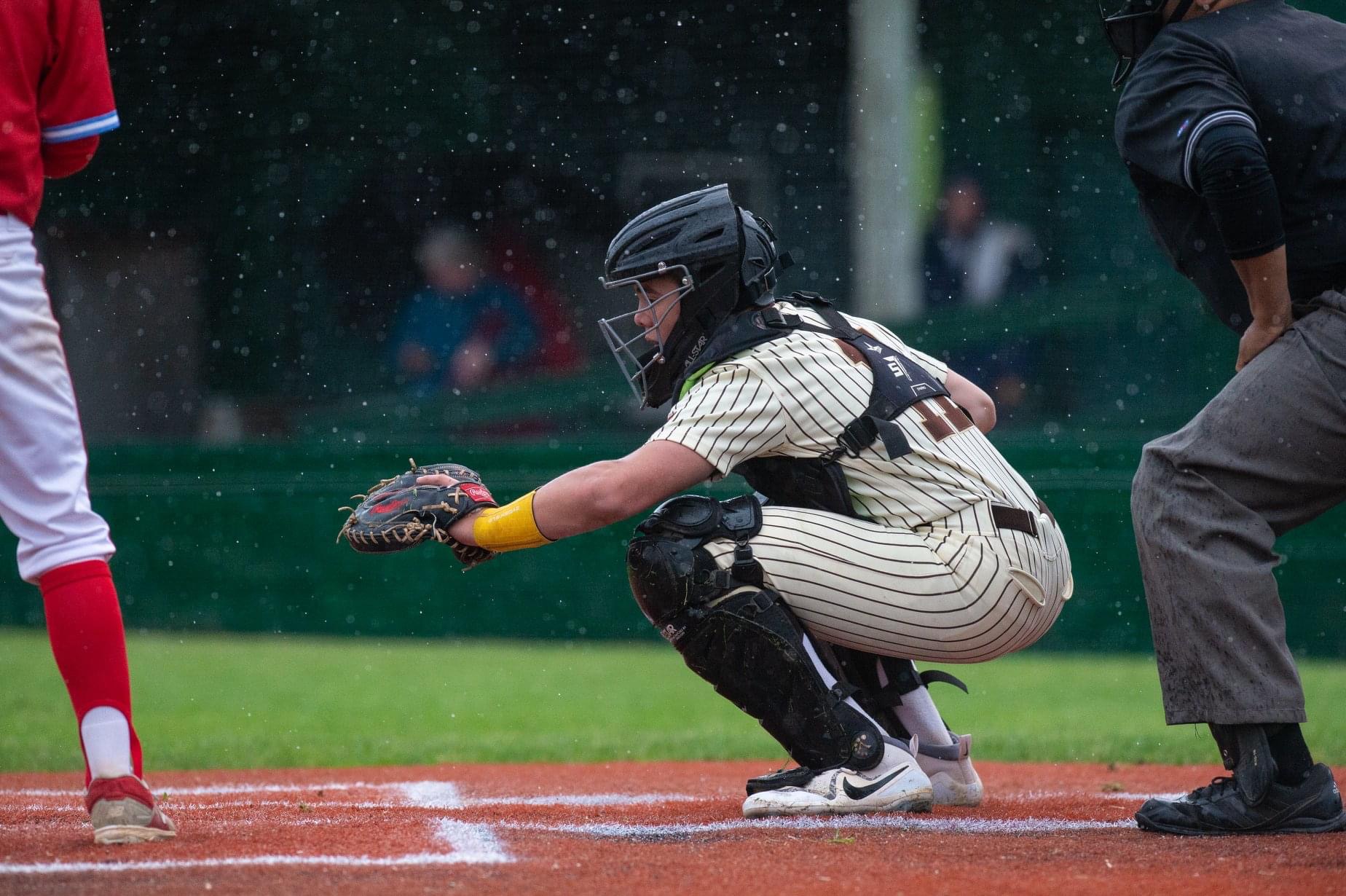
Before dissecting the numbers by age, it’s essential to understand the components that comprise a catcher’s pop time. At its core, pop time is a composite of three primary elements: exchange time, transfer time, and arm strength. The exchange—the moment the ball leaves the pitcher’s hand and is secured by the catcher—demands soft hands and impeccable timing. A rushed exchange can add precious tenths of a second, while a seamless one sets the stage for a rapid transition. The transfer, the bridge between receiving the ball and launching it toward second base, is where technique shines. Elite catchers minimize this phase by eliminating unnecessary movements, their hands and feet working in unison like the gears of a well-oiled machine. Finally, arm strength and accuracy determine the velocity and trajectory of the throw. A powerful arm can compensate for a slower transfer, but precision ensures the ball arrives on target, where the second baseman’s glove awaits like a magnet.
These mechanics are not isolated; they are interdependent, each influencing the other. A catcher with a lightning-fast exchange but a sluggish transfer will struggle to post elite numbers, just as one with a cannon for an arm but poor footwork will find their throws sailing wide of the mark. The true maestros of pop time are those who harmonize these elements, their movements fluid and economical, their instincts honed by thousands of repetitions.
Youthful Exuberance: Pop Time in the Teenage Years
For teenage catchers, pop time is often a tale of raw potential tempered by inexperience. At 16 or 17 years old, the average pop time hovers around 2.1 to 2.3 seconds, a range that reflects both physical development and the steep learning curve of the position. These young athletes are still refining their exchange mechanics, their transfers occasionally marred by hesitation or over-eagerness. Their arm strength, while improving, may lack the consistency of more seasoned players, and their footwork—critical for quick releases—is often a work in progress.
Yet, it’s in these formative years that the seeds of elite pop time are sown. Coaches emphasize fundamentals: quick feet, soft hands, and the ability to receive pitches with minimal disruption. Drills that simulate game scenarios—receiving throws from the pitcher, transitioning to a throw, and firing to second—become the bedrock of their development. The most promising prospects stand out not just for their raw numbers, but for their adaptability, their willingness to embrace feedback, and their relentless work ethic. A 17-year-old with a pop time of 2.0 seconds is a rarity, a diamond in the rough whose potential could one day redefine the standards of the position.
The Prime Years: Pop Time in the Early to Mid-20s
By the time a catcher reaches their early to mid-20s, they enter the golden zone of physical maturity and technical refinement. Pop times in the 1.9 to 2.1-second range become achievable, and those who push into the 1.8-second territory are often the envy of scouts and opponents alike. This is the age of specialization, where years of repetition have ingrained muscle memory, where the exchange is second nature, and the transfer is a blur of efficiency. Arm strength peaks, and the ability to generate whip-like throwing mechanics—where the arm acts as a slingshot rather than a piston—becomes a hallmark of elite performers.
In this stage, the intangibles begin to matter as much as the tangible metrics. A catcher’s baseball IQ, their ability to read hitters and anticipate plays, can shave off critical milliseconds. Their rapport with pitchers—understanding their tendencies, their timing, and their pitch sequences—allows them to position themselves optimally, reducing the distance their body must travel to make a throw. The best in this age bracket don’t just throw hard; they throw smart, their throws arriving with surgical precision, often before the runner has even committed to stealing.
The Veteran’s Edge: Pop Time in the Late 20s and Beyond
As catchers enter their late 20s and beyond, the narrative shifts from raw power to calculated efficiency. Pop times in the 2.0 to 2.2-second range are common, a testament to the durability of their mechanics and the wisdom of experience. While arm strength may wane slightly with age, the true veterans compensate through anticipation, positioning, and an almost preternatural ability to disguise their throws. Their exchanges are surgical, their transfers a masterclass in economy of motion, and their throws are guided by a deep understanding of the game’s rhythms.
This is where the art of deception comes into play. A veteran catcher might feign a throw to second, only to hold the ball and pick off a runner at first—a maneuver that doesn’t register on the pop time radar but speaks volumes about their baseball acumen. Their pop times may not be the flashiest, but they are often the most reliable, their consistency a product of years spent refining their craft. The elite veterans are those who can still deliver a 1.9-second pop time in a crucial game, their bodies moving with the precision of a well-oiled machine, their minds a step ahead of the opposition.
Positional Nuances: How Catcher Pop Time Varies by League and Level
Pop time isn’t a one-size-fits-all metric; it adapts to the demands of different leagues and levels of play. In the minor leagues, where raw athleticism and untapped potential reign supreme, pop times can be erratic, swinging wildly from sub-2.0 seconds to well over 2.3 seconds depending on the prospect’s stage of development. The high-pressure environment of the major leagues, however, demands consistency, with most starting catchers clustering around the 1.9 to 2.1-second mark.
In the international arena, particularly in leagues like Japan’s NPB or Korea’s KBO, pop times often reflect a blend of technical precision and cultural emphasis on fundamentals. Japanese catchers, for instance, are renowned for their meticulous footwork and exchange mechanics, their pop times frequently dipping into the 1.8-second range. Meanwhile, in the collegiate ranks, the variability is higher, with some standout players posting elite times while others are still grappling with the nuances of the position. Each level of play offers a unique lens through which to view pop time, a reminder that the metric is as much about context as it is about raw numbers.
The Future of Pop Time: Technology and the Next Generation
The evolution of pop time is inextricably linked to the march of technology. High-speed cameras, wearable sensors, and advanced analytics have transformed the way catchers train, providing real-time feedback on every facet of their mechanics. Tools like Rapsodo and TrackMan now offer granular data on exchange times, transfer speeds, and throw velocities, allowing players to pinpoint weaknesses with surgical precision. The next generation of catchers will grow up in a world where pop time is not just a stat, but a science, their development guided by data-driven insights and virtual reality simulations.
Artificial intelligence is also poised to play a role, with machine learning algorithms analyzing vast datasets to identify patterns and predict optimal training regimens. Imagine a system that can simulate a catcher’s pop time against every possible runner’s steal attempt, offering personalized drills to shave off those last few milliseconds. The future of pop time isn’t just about throwing harder or moving faster; it’s about outthinking the game, leveraging technology to gain an edge that was once the stuff of science fiction.
Conclusion: The Pursuit of the Perfect Pop Time
Catcher pop time is more than a stat; it’s a narrative of growth, adaptation, and the relentless pursuit of excellence. From the tentative steps of a teenage prospect to the seasoned mastery of a veteran, each phase of a catcher’s career is defined by their ability to refine and perfect this critical skill. Elite pop times are not gifted; they are earned, the result of thousands of hours spent in the bullpen, on the field, and in the weight room. They are a testament to the catcher’s dedication, their baseball IQ, and their unwavering commitment to the craft.
As the game continues to evolve, so too will the standards of what constitutes an elite pop time. The bar will rise, the technology will advance, and the players who rise to meet these challenges will redefine what it means to be a catcher in the modern era. But at its heart, the story of pop time remains a human one—a tale of perseverance, ingenuity, and the unyielding desire to be the best.