In the world of youth baseball, few rules carry as much weight—or as much debate—as pitch count regulations. These guidelines, designed to protect young arms from overuse, have evolved into a cornerstone of player development and safety. As we approach 2025, the Little League Pitch Count Rules stand as a testament to the sport’s commitment to balancing competition with long-term health. Whether you’re a parent navigating the nuances of game day or a coach strategizing for a championship run, understanding these rules isn’t just advisable; it’s essential. This guide dives deep into the intricacies of the 2025 pitch count framework, exploring its origins, practical applications, and the broader implications for the future of youth baseball.
The Evolution of Pitch Count Rules: From Obscurity to Mandate
The journey of pitch count regulations is a fascinating study in how sports adapt to emerging science. Before the late 1990s, youth baseball operated under vague guidelines, often deferring to vague notions of “arm fatigue” or “coach’s intuition.” The turning point came with a surge in Tommy John surgeries among adolescent pitchers—a trend that alarmed medical professionals and parents alike. Studies, such as those published in the *American Journal of Sports Medicine*, began to quantify the risks of overuse, linking high pitch volumes to increased injury rates. By the early 2000s, organizations like Little League International took heed, introducing standardized pitch counts tied to age groups. Fast-forward to 2025, and these rules have undergone iterative refinements, incorporating data from biomechanical research and load management strategies borrowed from professional baseball. The result is a nuanced system that doesn’t just cap pitches but also accounts for rest periods, game context, and even the type of pitches thrown. This evolution reflects a broader shift in youth sports: the acknowledgment that development must coexist with preservation.
Decoding the 2025 Little League Pitch Count Matrix
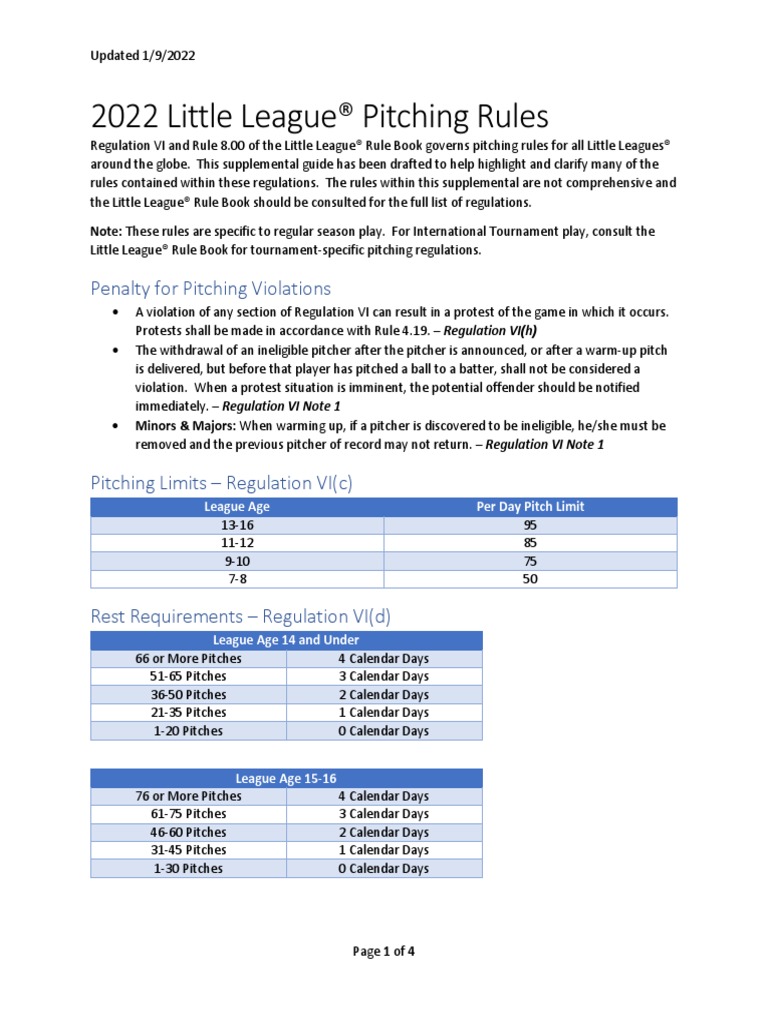
At the heart of the 2025 rules lies a tiered pitch count matrix, meticulously calibrated to age and competitive level. For players aged 7–8, the daily limit is 50 pitches, with a mandatory two-day rest period after 35 pitches. The 9–10 age bracket sees a slight uptick to 75 pitches, but the rest requirements tighten—35 pitches now mandate a single day of rest, while 50 pitches trigger a two-day hiatus. The most dramatic changes appear in the 11–12 and 13–18 divisions, where pitch counts climb to 85 and 105 respectively, but the rest protocols become increasingly granular. For instance, a 13-year-old throwing 66 pitches in a game must observe a two-day rest, whereas 86 pitches demand a three-day respite. These thresholds aren’t arbitrary; they’re derived from research on cumulative load, where the body’s recovery capacity is as critical as the immediate strain. Coaches must now juggle not just the pitch count but also the “pitch clock” of rest days, a dual-track system that demands foresight and adaptability.
Rest Days: The Unsung Heroes of Arm Preservation
If pitch counts are the visible guardrails of youth baseball, rest days are the invisible scaffolding holding them aloft. The 2025 rules don’t merely impose rest periods—they codify them into a structured recovery ecosystem. For pitchers who exceed 50 pitches in a game, the rest period isn’t just a suggestion; it’s a non-negotiable reset. The rationale is simple yet profound: tendons and ligaments, unlike muscles, lack a robust blood supply. This means they heal slowly, and repeated stress without adequate recovery can lead to microtears and, eventually, catastrophic failure. The rest-day requirements also introduce a psychological dimension. Young athletes, eager to prove themselves, may chafe at the idea of sitting out. Yet, this enforced downtime fosters resilience, teaching them that longevity in the sport hinges on discipline as much as performance. For parents, the rest-day rules serve as a litmus test for coaching philosophy—do they prioritize short-term wins or the holistic development of the player?
Position Players Pitching: A Gray Area with Growing Clarity
One of the most contentious aspects of the 2025 rules revolves around position players who occasionally step onto the mound. The traditional baseball ethos celebrates versatility, but the modern medical consensus warns against the cumulative toll of pitching, even in small doses. Little League’s updated guidelines now treat position players who pitch as pitchers for the purposes of pitch count and rest rules, regardless of how many pitches they throw. This means a shortstop who tosses 15 pitches in relief of a struggling starter must adhere to the same rest protocols as a dedicated hurler. The rationale is twofold: first, the biomechanical stress of pitching is unique, involving repetitive torque on the elbow and shoulder; second, the mental load of transitioning between roles can disrupt a player’s rhythm. Critics argue this rule stifles the “old-school” ethos of multi-position athletes, but proponents counter that it’s a necessary safeguard against the hidden dangers of partial exposure. The debate underscores a larger tension in youth sports: tradition versus innovation.
Technology’s Role: Pitch Trackers and the Data Deluge
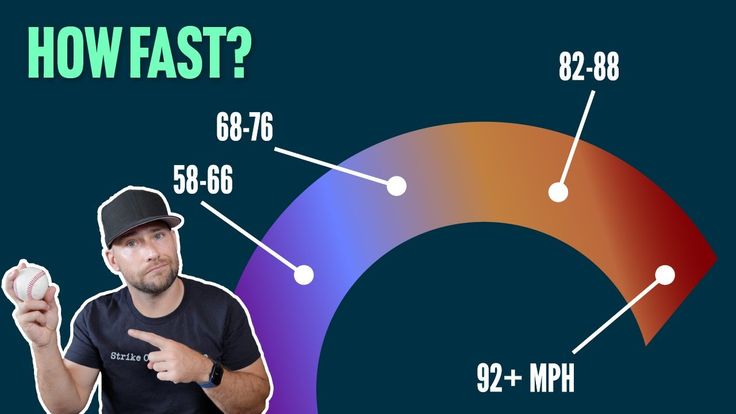
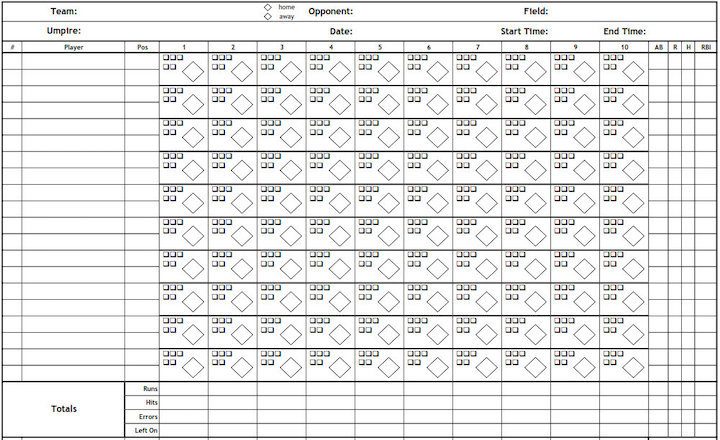
The 2025 pitch count rules are inextricably linked to the rise of technology in youth baseball. Gone are the days of coaches relying on memory or handwritten scorecards to track pitches. Today, digital pitch counters, wearable sensors, and even smartphone apps provide real-time data on pitch velocity, spin rate, and arm stress. These tools don’t just streamline compliance—they offer a granular view of a pitcher’s workload. For example, a coach might notice that a player’s fastball velocity drops precipitously after 40 pitches, signaling fatigue before the pitch count is even reached. Similarly, biomechanical sensors can detect subtle changes in throwing mechanics, alerting trainers to potential injury risks. Yet, this data deluge comes with its own challenges. Parents and coaches must resist the temptation to treat these metrics as gospel, remembering that youth athletes are not miniature professionals. The human element—instinct, experience, and intuition—remains irreplaceable. The 2025 rules strike a balance, leveraging technology to inform decisions while preserving the art of coaching.
The Psychological Impact: Pressure, Performance, and Parenting
Beyond the physical and logistical dimensions, the pitch count rules cast a long shadow over the psychological landscape of youth baseball. For young pitchers, the specter of the pitch count can be both a motivator and a source of anxiety. A coach’s decision to pull a pitcher at 70 pitches might be medically sound, but it can also feel like a public admission of vulnerability—a blow to a player’s confidence. Parents, too, grapple with the emotional weight of these rules. Watching a child’s dream of a no-hitter evaporate at 69 pitches is a bitter pill, one that tests the boundaries between support and pressure. The 2025 rules acknowledge this reality by emphasizing communication. Coaches are encouraged to frame pitch counts not as limitations but as safeguards, part of a broader conversation about sustainable development. For parents, the challenge lies in modeling resilience—celebrating effort over outcomes, and teaching that health is the ultimate victory. It’s a cultural shift, one that requires patience and perspective.
Global Harmonization: How Other Leagues Are Adapting
While Little League’s pitch count rules are among the most visible, they’re not operating in a vacuum. Youth baseball organizations worldwide are converging on similar frameworks, driven by a shared commitment to player safety. In Japan, the *Yakyu Taikai* system imposes strict pitch limits tied to age and competitive level, with rest periods mirroring Little League’s. European baseball, though less structured, is increasingly adopting pitch count guidelines inspired by MLB’s Pitch Smart program. Even in countries where baseball is a niche sport, governing bodies are aligning with international standards to ensure consistency. This global harmonization reflects a growing consensus: the future of youth baseball depends on harmonizing competition with care. For parents and coaches, this means that the 2025 Little League rules aren’t just a local mandate—they’re a piece of a larger puzzle, one that’s reshaping the sport’s ethical and practical foundations.
Looking Ahead: The Future of Pitch Count Rules
As we peer into the horizon of youth baseball, the pitch count rules of 2025 may well be seen as a transitional phase. The next frontier lies in personalized load management, where pitch counts are tailored not just to age but to individual physiology. Imagine a system where a pitcher’s rest days are determined by real-time data from wearable sensors, or where coaches receive AI-driven recommendations based on a player’s biomechanical profile. Such advancements are already in development, with organizations like the *American Sports Medicine Institute* exploring predictive models for injury risk. Yet, as we embrace these innovations, we must remain vigilant against the commodification of youth athletes. The goal isn’t to turn pitchers into data points but to ensure that every child has the opportunity to play, grow, and thrive—without sacrificing their future for the sake of a win. The 2025 rules are a step in that direction, but they’re only the beginning of a much larger journey.