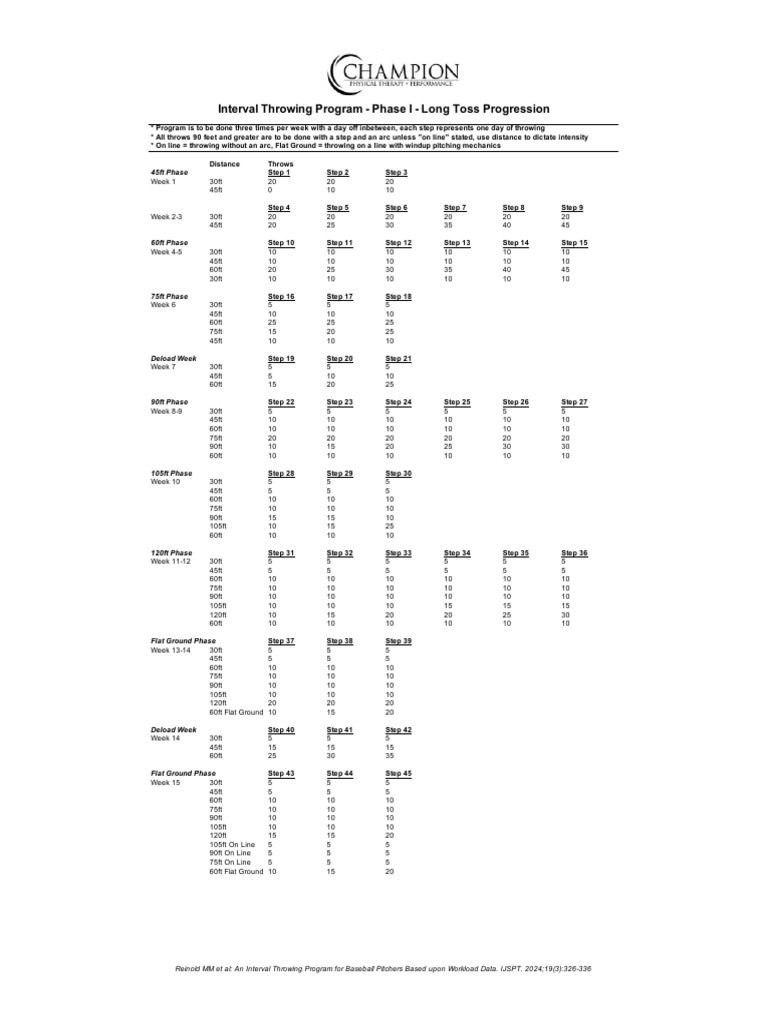
The rhythm of a baseball season, particularly at the Major League level, is as much about what occurs in the offseason as the dazzling moments under the stadium lights. While fans marvel at soaring home runs and pinpoint pitching during the spring and summer, the secret to peak performance often lies hidden in the meticulous offseason routines. Among these, throwing programs stand paramount. A standout approach that has gained traction within elite baseball circles is the philosophy often summarized as “Rest, Ramp, Repeat.” This methodology addresses an intriguing phenomenon — the paradoxical allure of offseason throwing, a period marked by strategic restraint yet unexplored potential. Beneath the surface of this rigorous regimen lies a profound narrative about endurance, precision, and the unyielding pursuit of longevity in the sport.
The Anatomy of Offseason Throwing: Why Rest Commands Respect
The cessation of competitive play ushers in a critical phase where rest is more than mere relaxation; it is the foundation for revival. After a grueling 162-game marathon, cumulative fatigue pervades every muscle and joint integral to the pitching and throwing mechanism. Rest in this context is not simply abstention from throwing, but a deliberate period allowing microtraumas to heal, inflammation to subside, and connective tissues to regain strength. This restorative interval recalibrates the arm’s proprioception — the subconscious awareness of limb positioning — thus resetting neuromuscular pathways crucial for controlled, efficient motion. Ignoring this respite risks cascading detriments, from diminished velocity to catastrophic injuries, making rest the non-negotiable cornerstone of any successful offseason throwing program.
Gradual Ramp-Up: Rebuilding Velocity and Precision with Intentional Progression
The transition from rest to activity requires more than a haphazard return to throwing; it demands a meticulously calibrated ramp-up phase. This incremental escalation is engineered to stimulate physiological adaptations without exceeding tissue tolerance thresholds. The structural complexity of the shoulder and elbow joints, supported by intricate musculature and ligamentous networks, necessitates a conservative approach that prioritizes quality over quantity. Early-phase throws emphasize refined mechanics and controlled distances, fostering neuromuscular re-education and ensuring the kinetic chain fires with optimal sequencing. This deliberate progression serves multiple purposes: regeneration of muscle memory, gradual conditioning of tendinous structures, and prevention of premature fatigue. Each increment builds a resilient platform upon which peak performance can be safely restored.
Rest, Ramp, Repeat: The Cyclical Genius Unveiled
Integrating rest and grinding ramp-ups into a cyclical, periodized model enhances the offseason throwing program’s efficacy. Embedded in the mantra “Rest, Ramp, Repeat” lies an acknowledgment of the body’s dynamic responsiveness to stimulus and recovery. Periodization allows athletes to oscillate between phases of intense controlled throwing and restorative intervals, fostering optimal tissue adaptation and minimizing overuse syndromes. This interspersed rhythm not only fortifies musculoskeletal resilience but also refines proprioceptive acuity and mental focus. Within these cycles, variability in throwing intensity and volume prevents monotony and overexertion, while psychological renewal is concurrently nurtured. The repetition of this cadence across weeks synthesizes sustained incremental gains, ensuring players build arm strength and endurance without succumbing to burnout or injury.
Biomechanical Precision: The Unseen Pillar of Success
Underlying the entire offseason throwing regimen is an unwavering emphasis on biomechanical excellence. Throwing is not merely an act of brute force; it is a symphony of kinetic energy transfer orchestrated through coordinated muscular contractions and joint articulations. Athletes following this program are encouraged to perform exhaustive motion analyses to identify and rectify inefficiencies that could precipitate injury or performance plateaus. Refining arm slot, stride length, hip-shoulder separation, and weight transfer are all integral components. This biomechanical vigilance harmonizes with the rest and ramp phases, ensuring that the body’s increasing workload is executed with movement economy and structural integrity. The result is a throwing arm that not only generates velocity but also withstands the rigors of sustained competition.
Psychological Resilience: The Mental Fortitude Behind the Throw
The physical aspects of offseason throwing are intricately entwined with psychological conditioning. The repeated cycles of rest and ramp demand patience and discipline, attributes often tested by the athlete’s own eagerness to resume full intensity. Mental resilience emerges as a critical pillar, guiding players through periods of perceived inactivity or controlled exertion. Visualization techniques, goal setting, and mindfulness are frequently incorporated to maintain motivation and sharpen focus. This heightened psychological awareness dovetails with physical phases, facilitating a mindful rehearsal of proper mechanics and fostering confidence. The mental component not only aids recovery but propels athletes towards their ultimate objective — returning stronger and more precise than before.
Longevity: The Quintessence of Offseason Throwing Philosophy
The enduring appeal of the “Rest, Ramp, Repeat” program transcends immediate performance metrics, extending into the domain of career longevity. Baseball’s toll on arms is well-documented, with many promising careers curtailed by repetitive stress injuries. This program embodies a proactive ethos that views offseason throwing as a form of arm preservation as much as development. The cyclical nature of controlled stress and recuperation rigorously conditions connective tissues, promoting collagen synthesis and microvascular health essential for long-term durability. Athletes who adhere to such disciplined regimens often enjoy extended prime years, with fewer interruptions due to injury. Such longevity, in turn, nurtures a deeper appreciation for the game’s intricate demands and fuels ongoing fascination with athletic mastery.
Practical Implementation: Customizing the Program for Individual Needs
While the overarching principles of rest, ramp, and repetition provide a robust framework, personalization is pivotal. Each athlete enters the offseason with distinct physiological baselines, injury histories, and performance goals. Tailoring the throwing program begins with comprehensive assessments encompassing range of motion, strength imbalances, and previous arm workload. Subsequent programming incorporates variable throwing intensities, recovery modalities, and cross-training adjuncts aligned with individual readiness. Furthermore, continuous monitoring via wearable technology or subjective feedback informs iterative adjustments. This bespoke approach ensures that the delicate balance between stressing and resting tissues is precisely calibrated, maximizing gains while mitigating injury risks. Ultimately, such personalization elevates the offseason throwing process from a generic routine to an artful science.
Conclusion: The Enduring Fascination with Offseason Throwing Routines
Offseason throwing programs encapsulate a compelling paradox — a period of quiet preparation imbued with dynamic potential. The “Rest, Ramp, Repeat” philosophy exemplifies this delicate balance, marrying scientific rigor with intuitive understanding of the athlete’s body and mind. It explains why many within the baseball fraternity regard the offseason not as downtime but as an arena for purposeful refinement and strategic renewal. This perpetual cycle of rest and work, interlaced with biomechanical precision and psychological fortitude, nurtures both performance excellence and career sustainability. It is within this intricate interplay that the sport’s enduring magic resides, captivating players and enthusiasts alike with the promise of ever-evolving mastery.