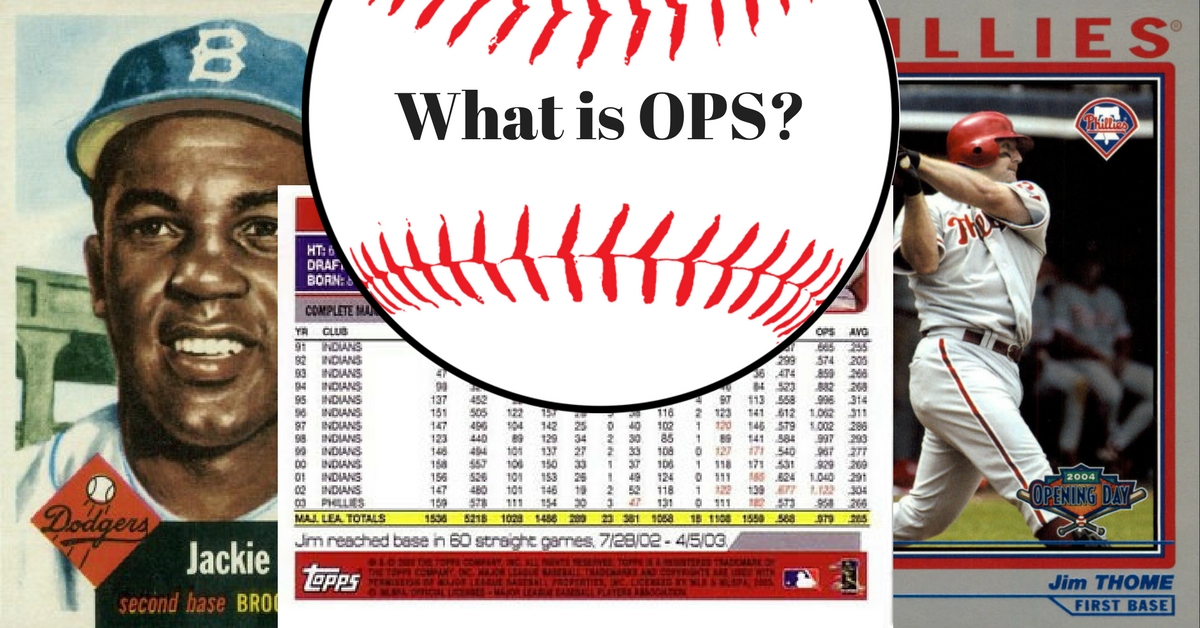
In the labyrinthine world of baseball statistics, where numbers dance like shadows in the outfield, one metric has emerged as the North Star for hitters: OPS. On-base plus slugging percentage isn’t just a stat—it’s a declaration of a batter’s prowess, a fusion of patience and power that separates the titans from the also-rans. But what, precisely, constitutes a “good” OPS? The answer isn’t as simple as a box score, nor as rigid as a batting stance. It’s a spectrum, a sliding scale of offensive excellence that evolves with the game itself. To chase OPS is to chase the very essence of hitting: the ability to not just connect with the ball, but to dictate the game’s rhythm, to force pitchers into submission, and to leave fans breathless with every crack of the bat.
The Alchemy of OPS: Where On-Base Meets Slugging
OPS is the offspring of two fundamental truths in baseball: the art of reaching base and the brute force of extra-base hits. On-base percentage (OBP) measures a hitter’s knack for avoiding outs, whether by drawing walks, blooping singles, or threading line drives through the infield. Slugging percentage (SLG), on the other hand, quantifies the damage done when contact is made—doubles, triples, and home runs that turn modest hits into game-changing events. Together, they form a hybrid stat that rewards both the cerebral and the physical aspects of hitting.
But OPS isn’t merely the sum of its parts. It’s a symphony where OBP sets the tempo and SLG delivers the crescendo. A hitter with a .350 OBP and a .500 SLG, for instance, boasts an OPS of .850—a figure that would have made Ted Williams nod in approval. The beauty of OPS lies in its simplicity: it distills the complex interplay of skill, strategy, and luck into a single, digestible number. Yet, for all its elegance, OPS is not without its critics. Some argue it overvalues power at the expense of contact, while others claim it fails to account for situational hitting. But in an era where analytics reign supreme, OPS remains the lingua franca of offensive evaluation.
The Benchmarks: What Separates the Elite from the Average
To understand what constitutes a “good” OPS, we must first define the landscape. The league average OPS typically hovers around .750, a figure that fluctuates with the ebb and flow of offensive trends. A hitter posting an OPS of .750 is, by definition, average—a solid contributor, but not a game-changer. Push that number to .800, and you’re looking at a player who’s likely an above-average starter, someone who can be counted on to produce consistently.
But the real magic happens when OPS crosses the .900 threshold. At this level, hitters enter the realm of the extraordinary. A .900 OPS suggests a player who not only avoids outs but also punishes mistakes with authority. Think of names like Mike Trout or Mookie Betts, whose careers have been defined by OPS figures that flirt with 1.000. These are the players who don’t just hit—they dominate. And when OPS soars above 1.000? That’s the territory of the mythic, the .400 hitters of the modern era. Only a handful of players in history have sustained an OPS over 1.000 for a full season, a testament to the rarity of such offensive brilliance.
Yet, context is everything. A .900 OPS in the dead-ball era would have been revolutionary; today, it’s merely excellent. The game has changed, and so too have the expectations. In the 1960s, an OPS of .850 might have been enough to win a batting title. Today, it’s a ticket to the All-Star Game. The bar has risen, and so must our understanding of what constitutes greatness.
The Evolution of OPS: How the Game Has Redefined Offensive Excellence
The story of OPS is, in many ways, the story of baseball itself. In the early 20th century, when the dead-ball era reigned, OPS was a foreign concept. Hitters prized contact over power, and walks were seen as a sign of weakness. But as the game evolved, so too did the metrics used to measure it. The rise of the home run in the 1920s and 1930s forced a reevaluation of offensive value, and by the 1950s, OPS began to gain traction as a way to quantify a hitter’s total impact.
Fast-forward to the steroid era, and OPS became a battleground. Players like Barry Bonds and Mark McGwire shattered records, their OPS figures soaring into the stratosphere. Bonds’ legendary 2004 season, where he posted an OPS of 1.422, remains one of the most dominant offensive performances in history. But as the league cracked down on performance-enhancing drugs, OPS figures recalibrated. Today, the game is a blend of power and precision, where hitters like Aaron Judge and Ronald Acuña Jr. redefine what’s possible with an OPS north of 1.000.
This evolution reflects broader shifts in the game. The analytics revolution has prioritized metrics like OPS+ and wOBA, which adjust for league averages and ballpark factors. Yet, OPS endures because it’s accessible, intuitive, and—most importantly—it works. It captures the essence of hitting in a way that few other stats can, bridging the gap between the old guard and the new.
The Psychological Edge: How OPS Shapes a Hitter’s Approach
OPS isn’t just a stat—it’s a psychological weapon. For hitters, it’s a number that looms large in the batter’s box, a silent challenge whispered by scouts, coaches, and fans alike. A player with a career OPS of .850 carries a different weight than one with a .750 mark. The former is expected to produce; the latter is given leeway. This pressure can be both a motivator and a burden, shaping a hitter’s approach at the plate.
Consider the difference between a patient hitter like Joey Votto and a free-swinging slugger like Giancarlo Stanton. Votto’s career OPS of .945 reflects his ability to work counts, draw walks, and grind out at-bats. Stanton, meanwhile, boasts a .965 OPS, fueled by tape-measure home runs and a willingness to chase pitches outside the zone. Both players thrive in their own ways, but their OPS figures reflect distinct philosophies. For Votto, OPS is a testament to discipline; for Stanton, it’s a celebration of power. Yet, both understand the unspoken rule: in the modern game, OPS is the currency of respect.
This psychological dimension extends beyond individual hitters. Teams now build rosters with OPS in mind, prioritizing players who can contribute in multiple ways. A .800 OPS from a middle infielder might be overlooked, but the same figure from a corner outfielder or designated hitter is gold. OPS has become a shorthand for versatility, a way to quantify a player’s ability to impact the game in more ways than one.
The Future of OPS: Will It Survive the Analytics Onslaught?
In an era where advanced metrics like wRC+ and xwOBA are gaining prominence, the future of OPS is a subject of debate. Some argue that it’s too simplistic, that it fails to account for the nuances of modern hitting. Others contend that its simplicity is its strength—a stat that even casual fans can understand and appreciate. The truth likely lies somewhere in between. OPS may never dethrone wOBA as the gold standard of offensive metrics, but it’s unlikely to disappear entirely.
What’s more likely is that OPS will evolve. We may see hybrid metrics that blend OPS with more advanced calculations, creating a new generation of stats that honor its legacy while addressing its limitations. For now, though, OPS remains the most accessible gateway to understanding a hitter’s value. It’s the stat that bridges the gap between the old and the new, the simple and the sophisticated.
And perhaps that’s its greatest strength. In a game where numbers can feel overwhelming, OPS offers clarity. It’s a reminder that baseball, at its core, is about the thrill of the hit, the crack of the bat, the roar of the crowd. OPS doesn’t just measure that thrill—it amplifies it. It’s the number every hitter is chasing, not because it’s perfect, but because it’s the closest thing we have to capturing the magic of the game.