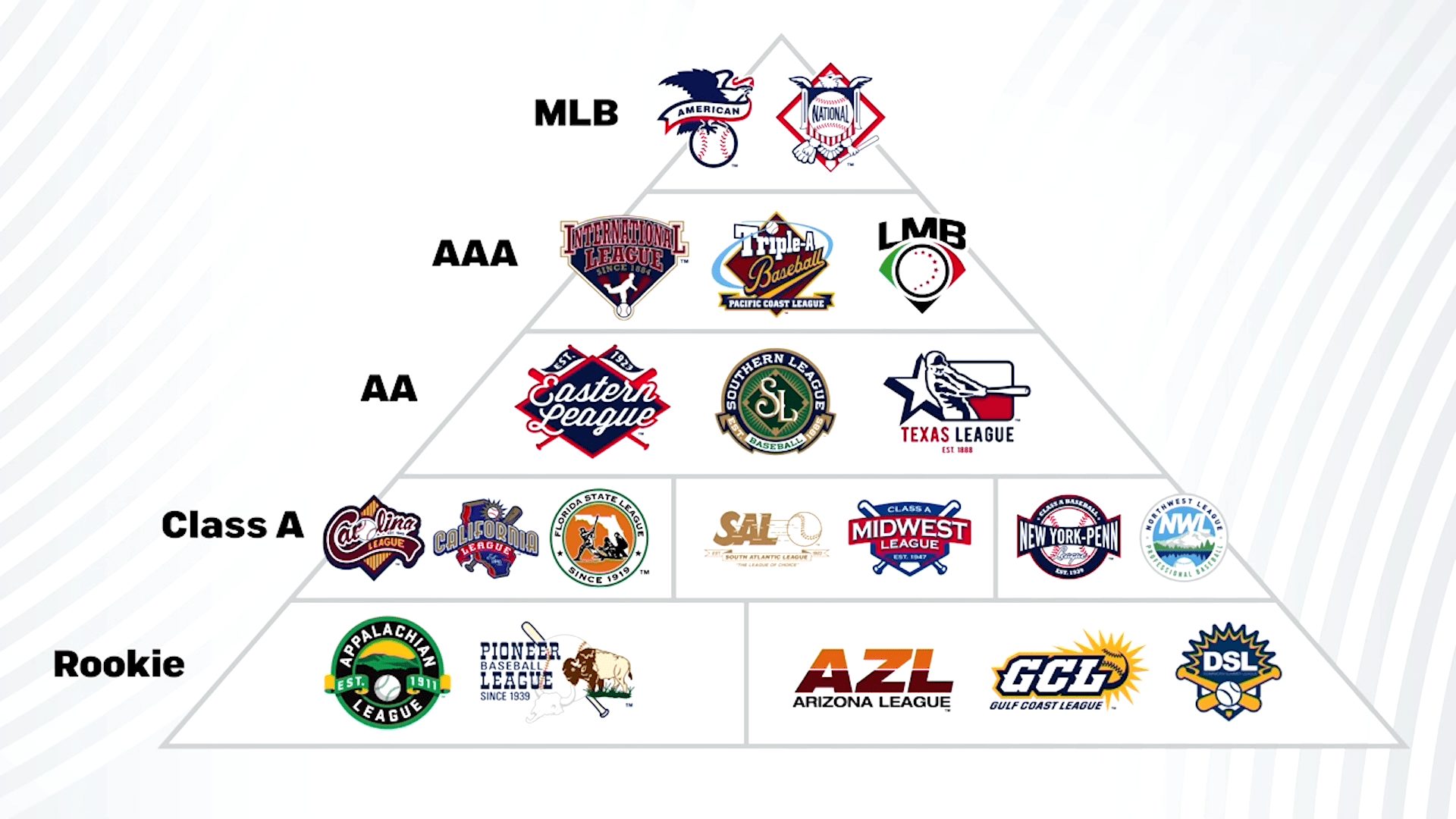
In the intricate mosaic of professional baseball development, a curious debate often surfaces among enthusiasts and insiders alike: when it comes to honing talent and inching closer to the Major Leagues, which minor league level truly reigns supreme—Double-A or Triple-A? On the surface, the answer might seem straightforward; yet, beneath this apparent simplicity lies a nuanced contest of skill, strategy, and opportunity. So, which level is actually better? Let’s unpack the dynamics of Double-A and Triple-A baseball to settle this spirited rivalry once and for all.
The Distinct Ecosystem of Double-A Baseball
Double-A baseball stands as a critical crucible where raw, emerging talent is tempered by the rigors of professional play. It is often described as the watershed moment in a player’s trajectory, where those with promise transition from mere potential to palpable impact. Players at this stage have typically conquered rookie leagues and Single-A, but the Double-A environment presents challenges of both mental acumen and physical refinement.
Unlike the polished veterans who populate higher levels, Double-A rosters brim with youthful exuberance and unrefined tools. Pitchers are experimenting with secondary pitches; hitters are adjusting to faster breaking balls and smarter pitchers. This stage exposes players to a higher caliber of competition, compelling them to cultivate consistency and adaptability. The game’s nuance is palpable—strategies intensify, and every at-bat or inning pitched can feel like a chess match, revealing cracks in a player’s approach or heroic flashes of potential.
From a developmental perspective, Double-A is an invaluable proving ground. Front offices closely monitor performances here, as excelling at this level often signals readiness for the leap to Triple-A or even a major league debut. It’s where true prospect status is earned, making it an indispensable filter in the scouting and development apparatus.
Triple-A: The Final Forge Before the Majors
While Double-A tests raw promise, Triple-A is the stage where polished refinement meets real-world pressure. This level is populated not only by top prospects on the cusp of promotion but also by seasoned professionals who shuttle between the majors and minors. The presence of experienced players injects a cerebral element into the competition, forcing even the most talented youngsters to elevate their game mentally and physically.
Triple-A acts as the primary reservoir for major league clubs when injuries strike or roster needs shift unexpectedly. This fluidity imposes a unique pressure: players here must be perpetually ready, knowing that their call-up might come at any moment. The pitching commands more strategic precision, while positional players face pitchers with a more sophisticated repertoire. The speed of the game increases subtly but unmistakably.
Moreover, Triple-A results tend to be more predictive of immediate major league contribution. Talents who succeed here have navigated the crucible of seasoned competition and tactical nuance. As such, Triple-A can be viewed as the final testing ground for players aiming to cement their careers at the highest level of the sport.
Comparing Quality of Play and Developmental Purpose
At first glance, Triple-A might seem superior solely due to proximity to the majors. However, the purposes of Double-A and Triple-A differ substantially, making direct comparisons tricky. Double-A is often regarded as the most accurate gauge of raw talent since it challenges players with unfiltered potential in a relatively unvarnished battlefield. Triple-A, conversely, is more nuanced, blending emerging talent with seasoned journeymen and players rehabbing from injury, thus producing a heterogenous competitive landscape.
For prospects, Double-A may offer a clearer portrait of upside and future trajectory, while Triple-A tests the ability to perform amidst the tactical pressures and roster uncertainties that characterize major league call-ups. The distinct developmental missions mean that each level offers unique value depending on the player’s profile and organizational role.
Player Perspectives: Experience and Opportunity
From the player’s vantage point, Double-A and Triple-A provide differing experiential landscapes. Double-A often feels like the first real taste of high-stakes baseball, where every game can be a stepping stone or a setback. Players here relish the opportunity to prove their mettle but often grapple with the transition from raw talent to reliable performer.
Triple-A players, on the other hand, balance the excitement of potential imminent major league promotion with the sobering reality of constant flux. For many, it is a bittersweet limbo—close enough to the dream to taste it, yet distant enough to endure frustration. Moreover, veterans in Triple-A serve as both competitors and mentors, shaping clubhouse dynamics and helping younger players navigate the grind.
The psychological demands intensify as one ascends the ladder. While Double-A players primarily battle to showcase potential, Triple-A athletes must continually demonstrate readiness for immediate contribution, balancing long-term development with short-term performance dictated by major league exigencies.
Organizational Strategy and Proximity to the Majors
From an organizational standpoint, Triple-A serves as the fulcrum for major league roster fluidity. Teams maintain a stable pipeline of talent here, ready to plug gaps caused by injuries or slumps. The level’s proximity to the majors necessitates a higher baseline of skill and maturity, underscoring its critical role as a strategic waypoint.
In contrast, Double-A functions more as an experimental theater, where developmental priorities sometimes outweigh winning. Organizations use this level to tinker with mechanics, pitch arsenals, and batting approaches. Success at Double-A doesn’t guarantee an immediate leap upward but often forecasts future promise.
Furthermore, geographic considerations often shape the identity of Triple-A teams, aligning them closely with their parent clubs to streamline player transitions. This synergy fosters seamless logistical and evaluative processes, facilitating rapid player movement between Triple-A and the majors.
The Fan Experience: Intensity vs. Expectation
For fans, Double-A and Triple-A offer vibrant, though distinct, viewing experiences. Double-A baseball charms with its showcase of emerging stars and raw athleticism. The game’s unpredictability can be electrifying, as players push their limits and the diamond becomes a theater of possibility.
Triple-A, by contrast, often delivers a more refined brand of baseball. Fans witness a blend of polished techniques and seasoned savvy, peppered with the added narrative of players fighting to reclaim or maintain their major league status. The stakes feel more immediate, and the presence of near-MLB talent creates a compelling atmosphere steeped in anticipation.
Choosing which level offers the “better” experience thus hinges on one’s appetite for developmental drama versus polished competition. Both levels contribute uniquely to the tapestry of minor league baseball folklore.
Conclusion: A Matter of Perspective and Purpose
So, in the ultimate reckoning of Double-A versus Triple-A—which is truly better? The answer depends on what one values most in baseball’s developmental hierarchy. Double-A is the realm of raw talent blossoming under pressure, an arena where promise meets challenge. Triple-A represents the cusp of the big show, where polish meets opportunity, and every player battles not just opponents but the weight of expectation.
Neither level is inherently superior. Instead, they remain complementary stages, each indispensable in sculpting the athletes who will one day grace baseball’s grandest stages. Whether one prefers the thrilling potential of Double-A or the refined grit of Triple-A, both offer a fascinating glimpse into the relentless pursuit of excellence that defines professional baseball.