Baseball, a game of inches and milliseconds, has long captivated fans with its duel between pitcher and batter. Among the sport’s most mesmerizing spectacles is the pitched ball—an object hurtling toward home plate at velocities that defy human reaction time. Yet, not all pitches are created equal in their difficulty to hit. Some glide with deceptive ease, while others twist, dive, and blur in ways that leave even the most seasoned hitters flailing. The question lingers: what is the hardest pitch to hit in baseball? The answer isn’t just a matter of speed; it’s a symphony of physics, psychology, and the raw athleticism of those who throw and those who swing.
The Fastball: A Blur of White Against Black}
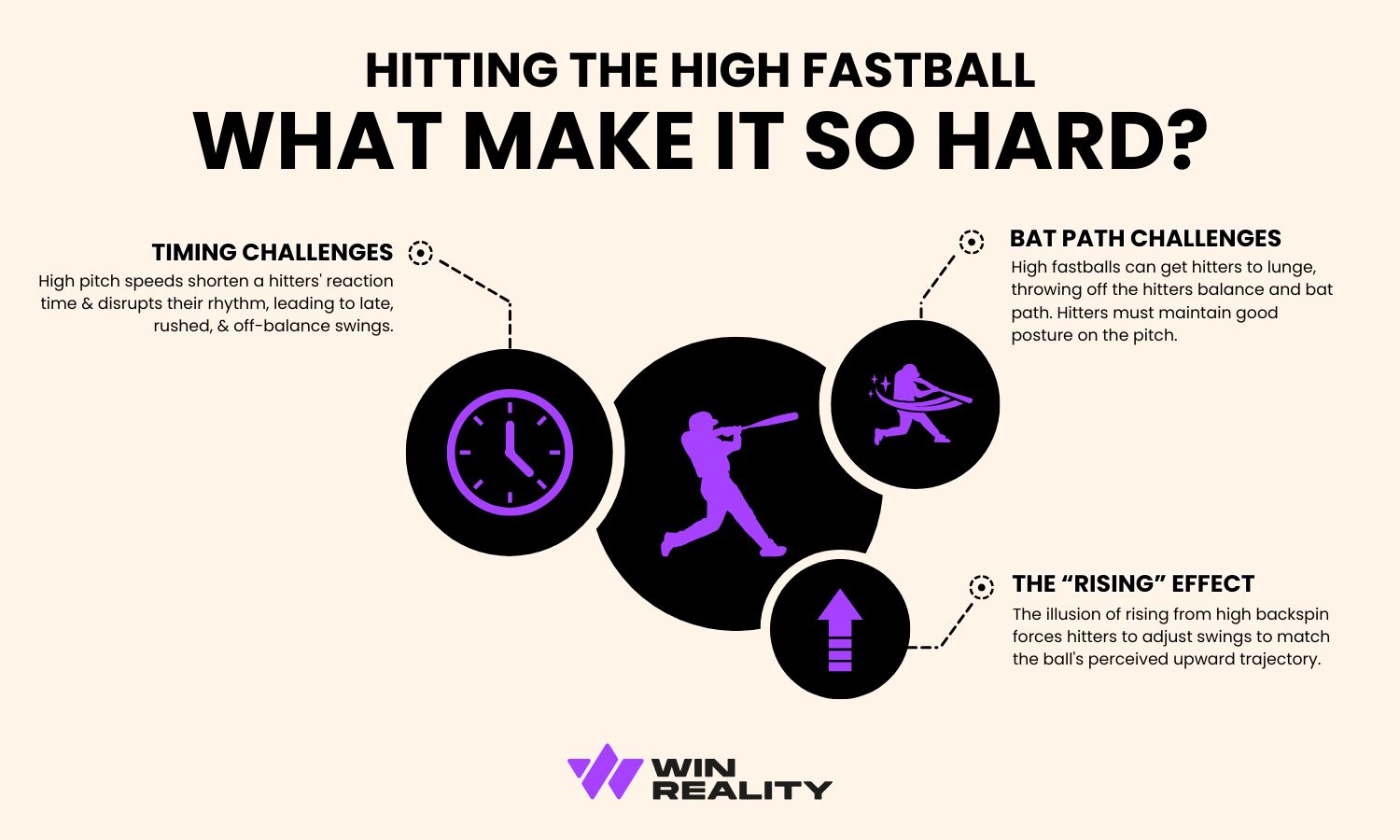
The fastball is the cornerstone of pitching arsenals, a weapon so ubiquitous that its very name feels like an understatement. At its core, a fastball is an exercise in brute force—air displaced by a spinning sphere, hurtling toward a batter at speeds that can exceed 100 miles per hour. The challenge for the hitter isn’t just tracking the ball; it’s predicting its trajectory in the split second before it arrives. A four-seam fastball, with its minimal movement, relies on pure velocity to overwhelm. Yet, even this seemingly straightforward pitch is a masterclass in deception. The pitcher’s grip, the angle of release, and the spin rate all conspire to make the ball appear to rise or sink at the last moment, a phenomenon known as “late life.”
Consider the physics: a ball spinning at 2,500 revolutions per minute generates a Magnus force that can alter its path by inches over the final few feet. For a batter standing 60 feet, 6 inches from the mound, that’s the difference between a line drive and a harmless pop-up. The fastball’s allure lies in its simplicity—yet its mastery is anything but simple. It’s the pitch that separates the good from the great, the one that forces hitters to trust their instincts over their eyes.
The Slider: A Pitch That Defies Expectation}
If the fastball is the sledgehammer of pitching, the slider is the scalpel—a pitch designed to dissect a hitter’s timing with surgical precision. Thrown with a grip that imparts a combination of forward spin and side spin, the slider breaks sharply downward and to the side, often at the last possible moment. Unlike the fastball, which challenges the batter’s eyes, the slider preys on their expectations. A hitter expecting a fastball may commit early, only to watch the ball dart away like a startled gazelle, leaving their bat swinging at thin air.
The slider’s effectiveness is rooted in its unpredictability. A well-thrown slider can appear identical to a fastball out of the pitcher’s hand, only to diverge violently as it approaches the plate. The late break is what makes it so devastating. By the time the batter realizes the pitch isn’t a fastball, it’s too late to adjust. The slider’s movement is a study in aerodynamics, where the seams of the ball catch the air at just the right angle to induce a sharp, late break. It’s a pitch that rewards precision and punishes hesitation.
The Curveball: The Art of Controlled Chaos}
Few pitches in baseball are as polarizing as the curveball. To some, it’s a cheat code—a pitch that bends like a boomerang, leaving hitters bewildered. To others, it’s a gamble, a pitch that demands perfect execution to avoid hanging in the zone like a piñata. The curveball is a testament to the pitcher’s ability to manipulate the ball’s spin, imparting a topspin that causes it to tumble earthward with a velocity that belies its trajectory. The result is a pitch that seems to drop off a cliff, a visual illusion that plays tricks on the batter’s depth perception.
The curveball’s deception lies in its contrast. While a fastball appears to rise due to its backspin, the curveball’s topspin makes it seem to fall. The hitter’s brain, trained to expect a certain flight path, is tricked into overestimating the ball’s height. By the time the curveball reaches the plate, it’s already descending, leaving the batter lunging or, more often, whiffing. The pitch’s effectiveness is a dance between physics and psychology, where the pitcher’s control over spin dictates the hitter’s perception of reality.
The Changeup: The Illusion of Deception}
In a game where velocity is king, the changeup is the jester’s trick—a pitch that slows the game to a crawl, only to leave the batter flailing. Thrown with the same arm action as a fastball but with a grip that reduces spin, the changeup arrives at the plate with a velocity that’s 10 to 15 miles per hour slower than the pitcher’s fastball. The deception isn’t just in the speed; it’s in the batter’s inability to distinguish the pitch from a fastball until it’s too late. The changeup’s late movement, often a slight tail or drop, further compounds the hitter’s confusion.
The changeup is a masterclass in timing disruption. A batter’s swing is calibrated to the speed of the pitcher’s fastball, so when a changeup arrives, the hitter’s muscles and eyes are already committed to a faster pitch. The result is a swing that’s either too early or too late, leaving the batter off-balance and out of sync. The pitch’s effectiveness is a testament to the pitcher’s ability to sell the deception, making the changeup a weapon that thrives on the hitter’s own expectations.
The Knuckleball: A Pitch That Defies Logic}
If the curveball is a controlled chaos, the knuckleball is pure anarchy. Thrown with a grip that minimizes spin, the knuckleball dances unpredictably, its path dictated by the whims of air currents and the ball’s seams. The pitch’s lack of rotation means it can move erratically in any direction, making it nearly impossible to predict. Hitters describe facing a knuckleball as akin to trying to swat a fly with a toothpick—frustrating, futile, and occasionally humiliating.
The knuckleball’s unpredictability is its greatest strength. Even the pitcher doesn’t know where it’s going, which makes it a nightmare for hitters and catchers alike. The ball’s movement is a study in chaos theory, where tiny variations in grip, release, and air pressure can lead to dramatic changes in trajectory. The knuckleball is the ultimate equalizer, a pitch that turns the pitcher’s lack of control into the hitter’s greatest challenge. It’s a reminder that in baseball, as in life, the most unpredictable forces are often the most powerful.
The Mental Game: Why Some Pitches Feel Impossible}
Beyond the physics and mechanics, the hardest pitches to hit are those that exploit the hitter’s mental vulnerabilities. A pitch that breaks late isn’t just a physical challenge; it’s a psychological one. The batter’s brain is wired to anticipate patterns, to expect consistency. When a pitch defies those expectations, the hitter’s confidence wavers. The slider that starts in the zone and ends in the dirt isn’t just a missed swing; it’s a blow to the hitter’s self-assurance. The knuckleball, with its erratic movement, forces the batter to second-guess every decision, turning the at-bat into a battle of wits as much as skill.
The mental aspect of hitting is often overlooked, but it’s the invisible force that separates the elite hitters from the rest. The ability to stay calm under pressure, to trust one’s mechanics despite the pitch’s deception, is what defines a great hitter. The hardest pitches aren’t just the ones that move the most; they’re the ones that make the hitter question their own abilities. It’s a psychological chess match, where the pitcher holds the queen and the batter fights to keep their king from falling.
The Evolution of Pitching: A Never-Ending Arms Race}
Baseball is a sport in constant flux, where innovation and adaptation drive the game forward. Pitchers are always searching for new ways to gain an edge, whether through refined mechanics, advanced analytics, or entirely new pitch types. The splitter, the cutter, and the sinker have all risen to prominence in recent decades, each offering a unique challenge to hitters. The evolution of pitching is a testament to the sport’s relentless pursuit of perfection, where every new pitch is a response to the hitters’ growing mastery.
The arms race between pitchers and hitters is a cycle of action and reaction. As hitters become more adept at recognizing pitches, pitchers respond with new variations, each designed to exploit a new weakness. It’s a dance that has played out for over a century, a never-ending quest to outthink and outmaneuver the opponent. The hardest pitches to hit aren’t just a product of today’s game; they’re a reflection of baseball’s enduring struggle to balance offense and defense.